International Education
TEH, Huijia

Graduate School of Asia-Pacific Studies, Waseda University PhD Candidate
main achievements
1. Teh, H. (2024). Rationales and factors influencing universities’ engagement with sustainability: an exploration of two Malaysian universities from stakeholders’ perspectives. Journal of Contemporary East Asia Studies, 13(1), 192–217. https://doi.org/10.
2. Teh, H. (2026). “Culture, faith and tradition as a catalyst for local sustainability: insights from the Ise and Japan Study Programme”. International Journal of Comparative Education and Development, 28(2), 93-107. https://doi.org/10.
3. Teh, H. (2026). Universities Navigating the Global Agenda from the (Semi-)periphery: Neoliberalism and Onto-Epistemic Concerns. In: Edwards, Jr., D.B., Webb, A., Asadullah, M.N., Kenayathulla, H.B. (Eds.) The Global Governance of Education and Sustainable Development. (pp.429-443). Palgrave Macmillan, Cham. https://doi.org/10.1007/
Field of study
Global Governance of Higher Education, Sustainability
The kind of researcher you are aiming to become
I wish to be a reflexive researcher who is able to recognise my positionality and privilege, and to acknowledge how my multiple identities have been shaped through my life experiences, to trace their impacts on how I then think about, approach, and conduct research. Next, I wish to learn about and embody different ways of knowing and being through my research, to embrace plural epistemologies and ontologies. By learning from diverse knowledge actors, practitioners, and elders, and by integrating knowledges, local, indigenous, and global, I wish to one day be able to join the voices challenging and dismantling the hegemony in academic knowledge production, making knowledge creation more equitable and just.
Introduction to your research theme
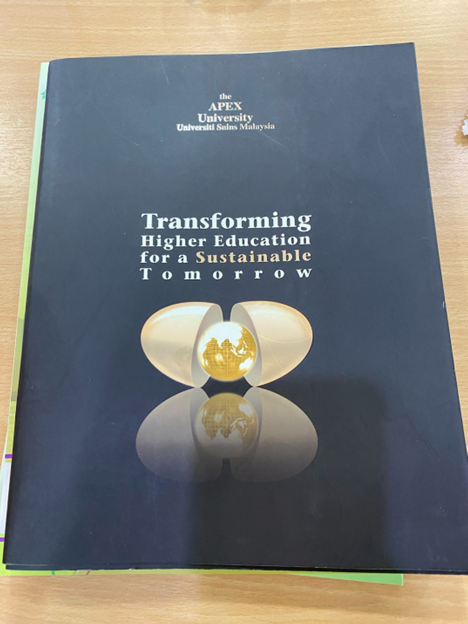
My research focuses on the sustainability engagement of Malaysian higher education with global governance through the case of the SDGs. It examines how universities are transforming their identities and roles by engaging with global governance while simultaneously being situated in the global, national, and local fields. On a broader scale, global sustainability agendas such as the SDGs embody an aspiration to bridge the divisions between development and equity, growth and ecology, global norms and local realities. From this perspective, universities’ engagement with sustainability can be understood as a reconciliatory process that attempts to align external global expectations with domestic sociocultural and epistemic contexts. Malaysian universities, situated at the intersection of postcolonial histories, multicultural identities, and global norm diffusion, enact a form of epistemic reconciliation as they negotiate between universal sustainability discourses and local knowledge systems. Faith and spirituality, while absent in the global agenda, are foregrounded in the Malaysian context, which also invites deeper research into how it interacts with the localisation of global sustainability norms. This framing highlights how universities might not merely adopt sustainability but also navigate the broader effort to reconcile global governance ideals with situated values and practices, contributing to a more inclusive and dialogical vision of global-local engagement.
Research Image