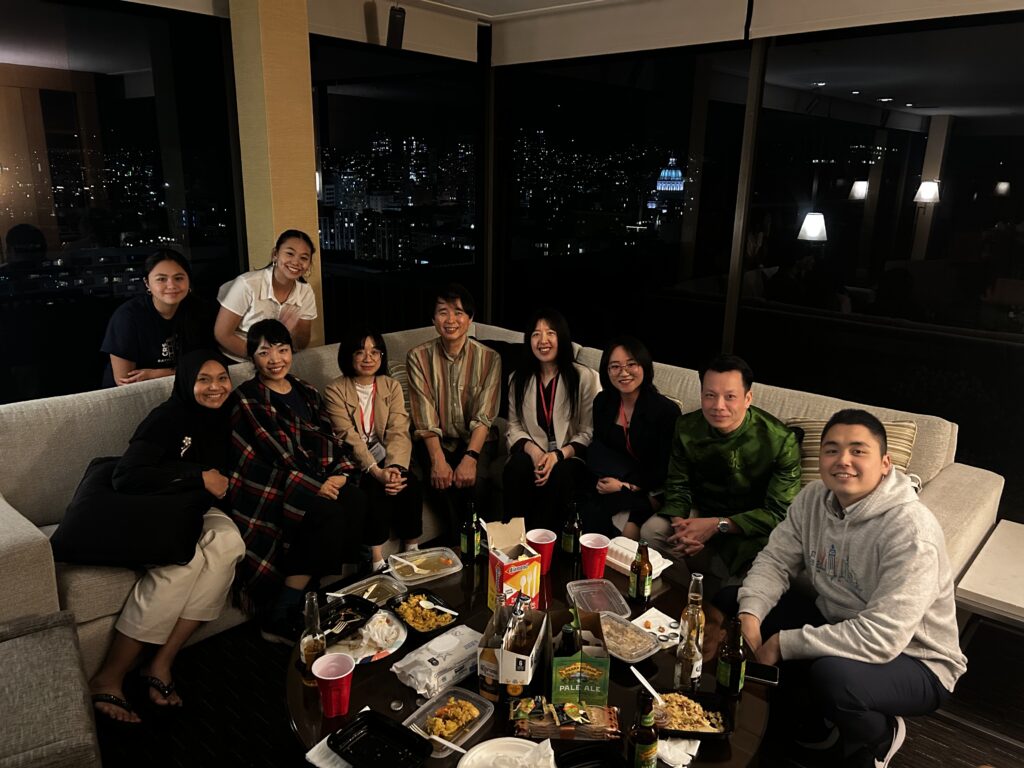
The 70th Comparative and International Education Society (CIES) Conference was held in San Francisco, United States, from March 28 to April 1, 2026. Under the conference theme “Re-examining Education and Peace in a Divided World,” the event marked the 70th anniversary of the Society’s founding and was conducted in a celebratory atmosphere. The conference attracted approximately 2,000 participants and remained highly active throughout the event.
Although education is not my primary field of specialization, I decided to participate in this conference upon receiving valuable encouragement from Professor Toyomi Asano, principal investigator of the International Reconciliation Studies Project, and Professor Kazuo Kuroda, a project member and President of the Society. I regarded this opportunity as a means to broaden the scope of my research and to explore potential intersections with new academic domains.

My presentation was entitled “Film as Intercultural Education for Reconciliation: The Case of Pacchigi! (2004).” As indicated by the title, this presentation positioned film as a form of social education and examined the concept of reconciliation through an analysis of the Japanese film Pacchigi!, which achieved considerable commercial success in Japan.
The film is set in Kyoto in 1968 and is structured as a youth drama centered on romance, music, and conflicts among young people. Beneath this narrative framework, however, lies the tension between the community of so-called Zainichi Koreans and Japanese society. The film depicts the struggles of young individuals whose personal relationships gradually intersect with collective tensions, illustrating how interpersonal experiences may evolve into expressions of group-level conflict—or conversely, how collective divisions shape personal relationships.
The youth portrayed in the film belong to the generation born in the postwar period, a generation that did not directly experience colonial rule or war. Nevertheless, the depiction of conflict among youth groups symbolically illustrates how memories and emotions are transmitted across generations, continuing to influence relationships among groups even in the absence of direct historical experience.
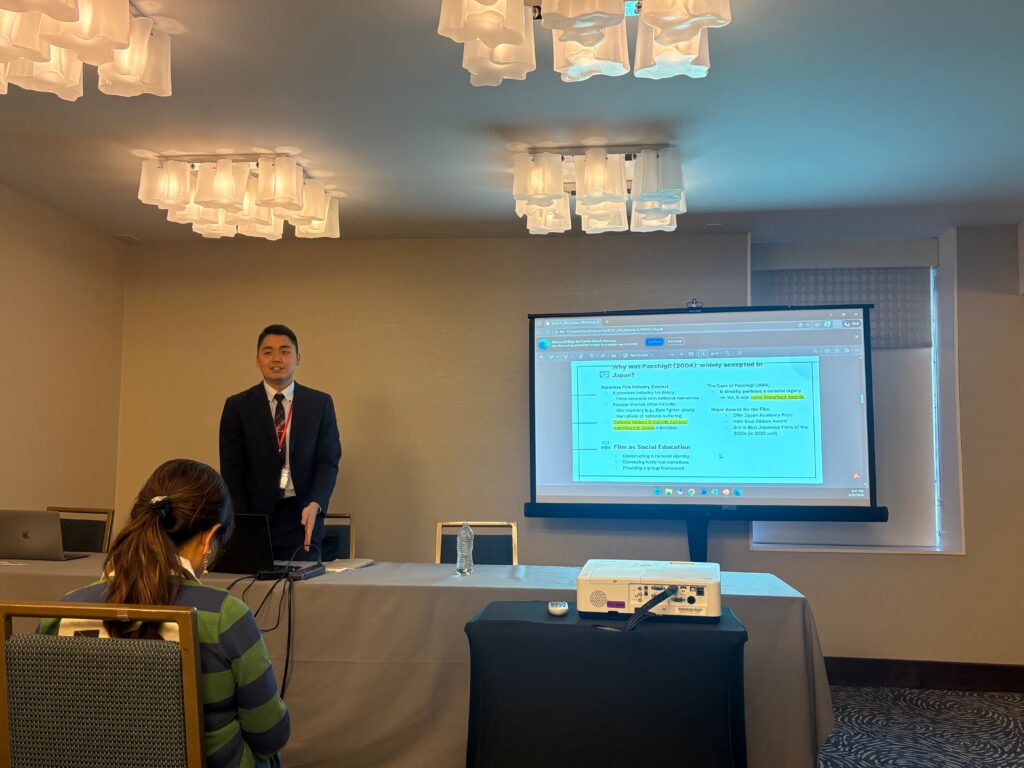
Although the film was released in 2004, its historical timing is particularly significant when considered in relation to the broader socio-political context of the period. From the late 1990s to the early 2000s, Japan–South Korea relations experienced notable improvements in the cultural sphere. This period witnessed the gradual liberalization of Japanese cultural imports in South Korea, the Japan–South Korea Partnership Declaration, the co-hosting of the FIFA World Cup, and the emergence of the Korean Wave following the success of the television drama Winter Sonata. The release of this film occurred precisely within this broader climate of cultural rapprochement.
However, the situation changed significantly during the 2010s. Japan began to be characterized by neighboring countries as undergoing a process of “rightward shift,” and Japan–South Korea relations deteriorated to a degree frequently described as the worst in history. Within Japan itself, the emergence of hate speech directed toward Zainichi Koreans became widely recognized as a social issue. In other words, although the early 2000s provided a social environment in which a film centered on Zainichi Koreans could be widely accepted in Japanese society, the subsequent decade witnessed a transformation in the conditions that had previously enabled such acceptance. Against this historical background, analyzing this film offers important insights into the nature of societal reception toward Zainichi Koreans in Japanese society during the early 2000s.
The film received numerous major film awards at the time of its release and has continued to be recognized into the 2020s, including its selection as one of the “Top Ten Japanese Films of the 2000s.” It has thus become a work deeply embedded in Japanese cultural memory. At this point, an important question emerges: why has a film dealing with a theme that may be interpreted as a form of “imperial legacy” continued to receive sustained recognition within Japanese society?
In general, for a commercial film intended for mass audiences to achieve broad acceptance, it is essential that the narrative resonates with frameworks of interpretation widely shared within society. Observations from practitioners involved in film production likewise suggest that the success of commercial films depends significantly on their ability to align with historical narratives that audiences already find familiar. In the Japanese context, one prominent narrative emphasizes the history of suffering and the tragedy of war, particularly through themes such as atomic bombings, air raids, and kamikaze missions. Films addressing these subjects have tended to receive widespread acceptance. By contrast, works that directly depict Japan’s role as a perpetrator have generally struggled to gain broad public support. From this perspective, the fact that this film, which addresses the issue of Zainichi Koreans in the 1960s—a theme that may be understood as part of the legacy of empire—achieved wide acceptance within Japanese society may appear, at first glance, to contain an element of contradiction.
Against this background, the present study analyzes the film from the perspective of frameworks of recognition. More specifically, it seeks to clarify how the Zainichi Korean community and Japanese society, as depicted in Kyoto in 1968, are represented as collective entities, and through this analysis, to interpret both the acceptance of the film in Japanese society and the broader structure of social recognition that supported such acceptance at the time. In conducting this analysis, the study draws upon the concepts of collective memory, developed within sociological scholarship, and the notion of the internal other, derived from postcolonial studies. Ultimately, the significance and limitations of the film are examined through the analytical lens of reconciliation studies.
To state the conclusion succinctly, the film possesses a certain degree of significance in that it made the presence of Zainichi Koreans visible within Japanese society and suggested the possibility of boundary-crossing at the individual level. At the same time, however, the frameworks through which groups themselves are recognized did not extend beyond the dominant interpretive boundaries of Japanese society, nor did the film function to transform those frameworks themselves.
With regard to the former point, the film presents several instances in which individuals cross collective boundaries. For example, the Japanese male protagonist falls in love with a Zainichi Korean heroine and, through a series of conflicts, ultimately enters into the internal space of the Zainichi Korean community. Additionally, the heroine’s older brother, who serves as a central figure within a Zainichi Korean youth group, is depicted as fathering a child with a Japanese woman. These narrative developments suggest that even when discord exists between groups, individuals may nonetheless transcend boundaries through personal struggle and interaction.
On the other hand, the framework of memory depicted in the film functions to position Zainichi Koreans as an internal other within Japanese society. Although they exist within Japanese society, they are portrayed as possessing historical experiences distinct from those of ethnic Japanese. This difference produces moments in which boundaries appear to be temporarily crossed at the level of personal relationships—such as through music or romantic interaction—yet the boundary between groups never fully disappears. Alternatively, once an individual crosses such a boundary, the individual may come to be positioned as an “other.” Indeed, even after the central couple forms a relationship, the narrative does not depict their integration into Japanese society in a manner suggesting complete social assimilation. This structure corresponds closely to the defining characteristic of the internal other as a presence that exists within society while remaining not fully assimilated.
Furthermore, the film suggests that historical memory is transmitted through different pathways among Japanese and Zainichi Koreans. In other words, streams of memory that exist outside the institutional frameworks that shape collective memory in Japanese society are nevertheless present within the national space of Japan itself. In this respect, the framework of memory depicted in the film can be understood as simultaneously making the internal other visible while also sustaining, rather than dissolving, the differences associated with that status.
Finally, I would like to situate this film from the perspective of reconciliation studies. The narrative setting of the film is Kyoto in 1968, a period following the normalization of diplomatic relations between Japan and South Korea in 1965. According to the tripartite conceptualization of reconciliation employed in reconciliation studies, this period may be understood as one in which intergovernmental reconciliation had already been achieved. Moreover, as previously noted, the film depicts several instances in which individual characters develop mutual understanding and relationships through personal interaction. Such moments may be interpreted conceptually as examples of reconciliation among citizens.
However, when viewed from the perspective of reconciliation between nations, or more broadly reconciliation between groups—particularly with reference to Zainichi Koreans—it is difficult to conclude that the film portrays a process of reciprocal transformation between the two groups. As discussed earlier, the film does not depict the reconstruction of the frameworks through which groups themselves are recognized. In this respect, it may be argued that the social-educational significance of the film contains certain limitations. At the same time, it is important to acknowledge that such an evaluation is made possible only from the retrospective vantage point afforded by the accumulated development of reconciliation studies as an academic field.
Indeed, the social-educational value of the film may be understood as significant in another sense. Specifically, the film contributed to making the presence of Zainichi Koreans visible within cultural production and presented their historical experiences to society through the narratives of its characters. Considering that social media had not yet become widespread at the time and that the circulation of information depended largely on formal education and mass media, the role played by such cultural representations deserves careful recognition and, perhaps, greater appreciation.
In connection with the activities of the Institute for International Reconciliation Studies at Waseda University, it is also worth noting the ongoing initiative known as the East Asia Reconciliation International Film Festival (ERIFF), which is organized primarily by students. The film Pacchigi! discussed in this presentation was screened at the 5th ERIFF held in 2025. This film festival aims to return academic insights from reconciliation studies to society through the medium of film. Rather than simply celebrating intergovernmental compromise or limiting itself to interpersonal exchange, the initiative conceptualizes reconciliation as the process through which groups in conflict undergo reciprocal transformation and seeks to promote the production and dissemination of films that embody such representations. As this initiative is closely related to the themes addressed in the present presentation, it has been briefly introduced here.
This presentation was made possible through the support of the International Reconciliation Studies Project. As a participant who benefited from this valuable opportunity, I would like to conclude by noting that Professor Kazuo Kuroda, a project member and leader of the International Education Group, presided over the conference as President-elect, successfully guiding its organization and marking the beginning of his presidential term with distinction. In addition, the active involvement of Professor Kuroda’s students, including Dr. Nazeer-Ikeda, who contributed significantly to the conference organization, was highly inspiring to me as a fellow member of the same project.
Although I participated in the conference as a scholar working outside my primary field of specialization, I was graciously invited by Professor Kuroda to attend gatherings for conference organizers as well as a celebration of his birthday. Despite the differences in academic specialization, being afforded such valuable experiences has strengthened my determination to further develop this research and, in doing so, to offer my sincere contribution in return for the opportunities I have received.