

Dates: March 27~ April 1, 2026
Venue: Hilton Union Square, San Francisco
Day 1: March 28, Saturday
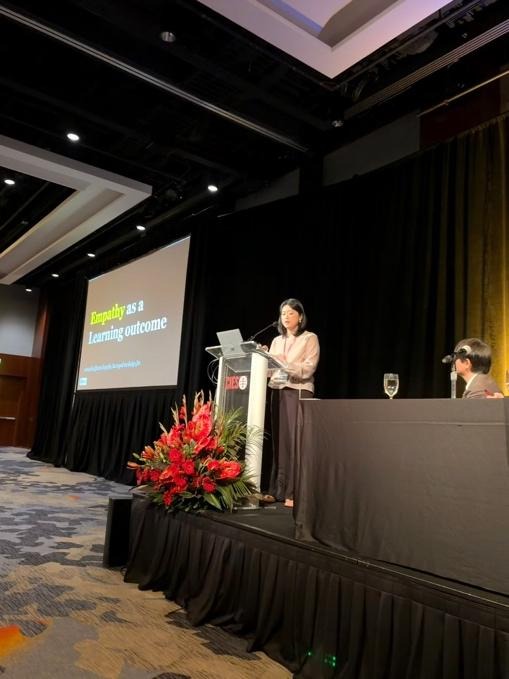
President Invited Symposium I.
International Education as Preventive Diplomacy for Peace (4:30pm)
Panelist:
- Kazuo Kuroda, President elect CIES 2026
- Fernando Reimers, Havard University
- Sheng-Ju Chan, National Chung Cheng University
- Assie- Lumumba, Cornell University
- Kyuwon Kang, Korea University
- JungHyun Ryu, The University of Tokyo
Moderator:
Sarah Asada, Kyoritsu Women’s University
Jennifer Olsen, University of Osnabruck
Presentation summary:
“Crossing Borders Without Crossing Boundaries: Empathy and the Missing Narrative of International Education”
I presented as part of a symposium titled “International Education for Peace,” which revisited the longstanding but underexamined relationship between international education and peacebuilding. The symposium traced how international education had long been shaped by the principle of peace — from early efforts under the League of Nations to postwar initiatives led by UNESCO and the Fulbright Program — and how “International Education for Peace” had over time become a global norm in educational policy and practice. The panel critically examined whether these initiatives had evolved beyond normative commitments into robust frameworks for preventive diplomacy, noting that limited theoretical and empirical research had continued to raise doubts about their effectiveness. At CIES 2026, the symposium sought to propose meaningful contributions to post-2030 global education governance in this space.
Within this symposium, my presentation argued that international education, as currently practiced, had failed to produce one of its most essential outcomes: empathy. Speaking from the dual perspective of researcher and practitioner, and focusing specifically on student mobility and institutional exchange, I challenged a foundational assumption of the field — that intercultural understanding naturally leads to empathy. It does not. And more critically, empathy had never been explicitly named as a goal of international education to begin with. It was a missing narrative.
Drawing on Knight and Altbach’s critique of market-driven internationalization, I argued that three decades of rankings-based partnership logic had produced a system of crossing borders without crossing boundaries — geographic mobility that left social stratification intact. Students travelled the world but met only peers who shared their class, security, and privilege. They developed intercultural fluency without developing the capacity to feel the weight of the social and global issues that shaped lives different from their own.
Using the University of Tokyo’s partnership with the Asian University for Women in Bangladesh as a concrete example, I illustrated what boundary-crossing international education actually looked like — and what became possible when students were brought into genuine encounter across lines of class, gender, and conflict.
I concluded with a call to action: to redesign partnership logic around diversity and inclusion rather than prestige, to name empathy explicitly as a learning outcome, and to recognize that diverse international students were not a burden institutions took on — but a vehicle through which our own students finally crossed the boundaries elite education had kept intact. Returning to the humanist vision of the Delors Report, I argued that empathy — not only for persons, but for the social and global issues that shaped their lives — was the missing word that made Delors’ fourth pillar, learning to live together, real.
Day 2: March 29, Sunday
Concurrent Session (2:45pm)
Peace Education across Borders, Regional Governance, Collaboration, and Reconciliation in ASEAN
Speakers
- Peace Education across Borders: Regional Governance, Collaboration and Reconciliation in ASEAN by JungHyun Ryu
- Regional Pathways to Post-national belonging: How ASEAN students in Japan Navigate National, Regional and Global Identities by Nguyen Viet Du
At the 2026 CIES Annual Conference, I organized and participated in a panel session titled “International Education for Peace and Reconciliation in Asia,” alongside fellow members of the International Reconciliation Studies (IRS) research team, including Viet Du. The panel examined how processes of peace and reconciliation can be understood as essential outcomes of educational exchange and collaboration across the Asian region, with a particular focus on identity formation, institutional frameworks, and cross-border partnerships in international higher education. Three presentations were delivered, collectively exploring how regional higher education initiatives serve as arenas where identities are reimagined and new forms of solidarity are built amid complex histories of conflict and political divergence.
As part of this panel, I presented findings from my International Reconciliation Studies research project, which examines the role of education in reconciliation processes across societies emerging from conflict. My presentation, “Cross-Border Peace Education and Research Collaboration in ASEAN,” explored cross-border peace education initiatives and research collaborations within the ASEAN region, examining their role in advancing peacebuilding and reconciliation. While regional networks such as AUN-HRE and SHAPE-SEA were central in promoting peace education, their influence varied considerably across member states due to ASEAN’s diverse social, cultural, and political contexts. Using a mixed-methods design combining policy analysis, institutional case studies, and semi-structured interviews, the research examined both macro-level governance frameworks and micro-level institutional practices in higher education, offering policy-relevant insights for strengthening the quality, sustainability, and effectiveness of cross-border peace education across the region.
Celebration of 70th Anniversary of CIES (6:00pm)
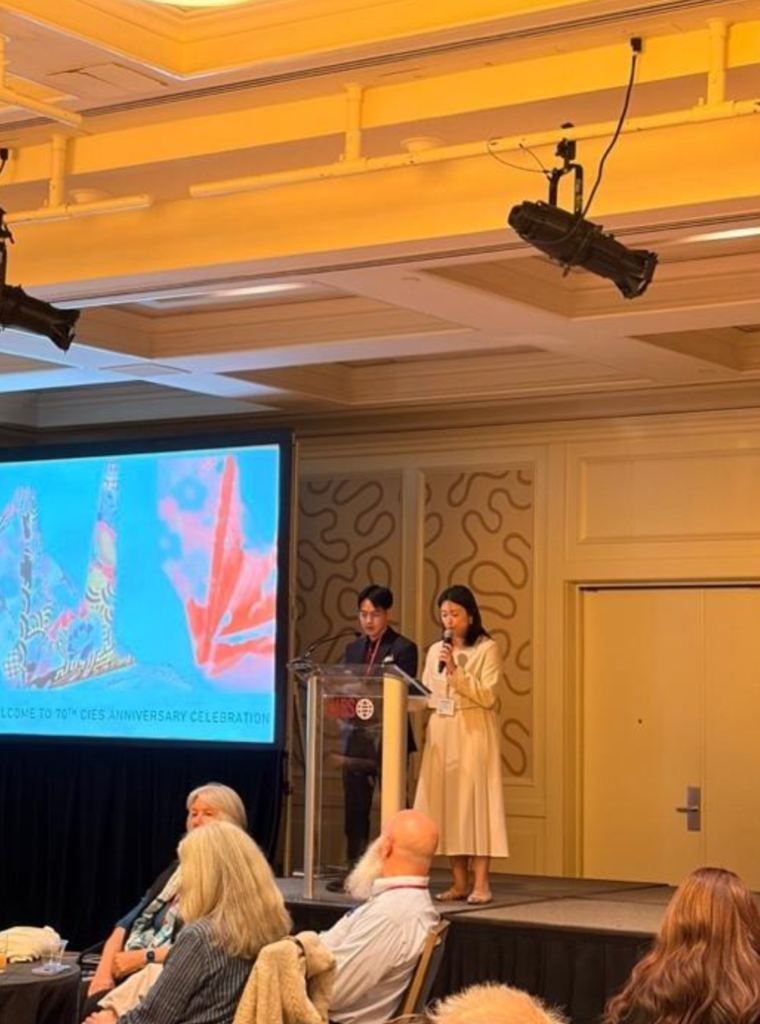
Event Summary : CIES 70th Anniversary Birthday Celebration March 29, 2026 | Grand Ballroom, San Francisco
MC: Jess Salangthong, Chulalongkorn University, JungHyun Ryu, The University of Tokyo
As one of two Masters of Ceremonies, I co-led the full evening program alongside a colleague, managing the run of show. My responsibilities included delivering opening and closing remarks, introducing the VIP speaker, guiding guests through the cake ceremony, presenting the anniversary video, and coordinating transitions between all segments of the program.
CIES marked its 70th anniversary with a celebratory evening event held on March 29, 2026, in San Francisco, coinciding with the 2026 CIES Annual Conference. The event brought together an estimated 100~200 attendees, including scholars, practitioners, and distinguished guests from across the global education community.
The program featured opening remarks, a congratulatory address by Professor Kazuo Kuroda (CIES President-Elect 2026), a commemorative cake ceremony celebrating both CIES and UNESCO milestones, and the premiere screening of a 70th anniversary video produced by PhD students from Waseda University, Japan.
CIES 70th Anniversary Commemorative Video
Produced by Huijia Teh and Huong Thi Nguyen, Ph.D students Waseda University
Supervised: JungHyun Ryu, The University of Tokyo
The video was produced by Huijia Teh and Huong Thi Nguyen, PhD students at Waseda University who recently joined the International Reconciliation Studies research team, under my supervision. The 15 minute commemorative video, premiered at the 70th Anniversary Celebration on March 29, 2026, was structured around the arc of Past → Present → Future, tracing the intellectual and institutional journey of CIES across seven decades.
The video opened with a brief history of CIES’s founding purpose and goals, followed by a visual timeline of conference themes spanning 70 years. Drawing on presidential addresses and archival materials — including excerpts from the 50th and 60th anniversary recordings — it traced recurring and emerging themes in comparative and international education, with particular attention to the field’s longstanding relationship with peace. This section was anchored by the UNESCO Constitution’s foundational phrase, “since wars begin in the minds of men,” and illustrated through a thematic constellation and curated quotes from presidential addresses highlighting how peace has been woven, explicitly and implicitly, throughout CIES’s history.
Day 3: March 30, Monday
Keynote Address: Peace Education in Precarious Time
Speaker: Monisha Bajaj, University of San Francisco
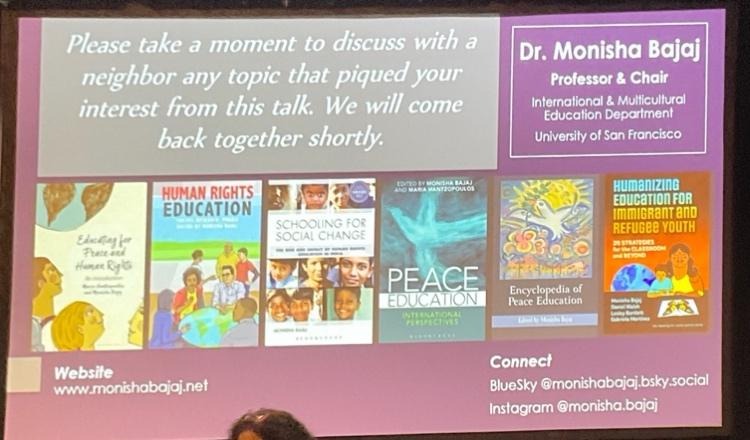
On Day 3 of the conference, I attended the keynote lecture delivered by Dr. Monisha Bajaj, Professor and Chair of International and Multicultural Education at the University of San Francisco. Titled “Re-examining Education and Peace in a Divided World,” the keynote opened with a deeply personal account of the partition of Pakistan and India — the story of a young boy who was forcibly displaced amid the violence and upheaval of independence. That boy, it emerged, was Dr. Bajaj’s own father. It was a powerful and moving way to open a keynote, grounding the abstract concepts of conflict and displacement in an intimate family history and reminding the audience that behind every policy debate and research framework are real human lives shaped by forces beyond their control.
From this personal foundation, Dr. Bajaj traced the evolution of peace education as a field of study and practice alongside international and comparative education, from CIES’s founding in 1956 through to the present moment of global polycrisis. She addressed the challenges facing conventional notions of liberal peace amid rising authoritarianism and the erosion of international human rights frameworks, and offered insights from critical and decolonial approaches to peace education — centering student and educator agency, human dignity, the ethic of justice, and the epistemic requirement of solidarity.
Her reflections prompted me to consider peace and reconciliation from perspectives I had not previously engaged with, and offered a renewed sense of purpose and direction for my own research within the International Reconciliation Studies project.
Day 4: March 31, Tuesday
Presidential Invited Symposium (1:15pm)
Beyond the binary of Conflict and Peace: Navigating Education and Peacebuilding
- Rita Nazeer Ikeda, George Mason University / Waseda University
- Luis Beniveniste, The World Bank Group
- Will Brehm, University of Canberra
- Kelsey Dalrymple, University of Wiconsin-Madison
- Arthur Romano, George Mason University
- Yuji Utsumi, Nagoya University
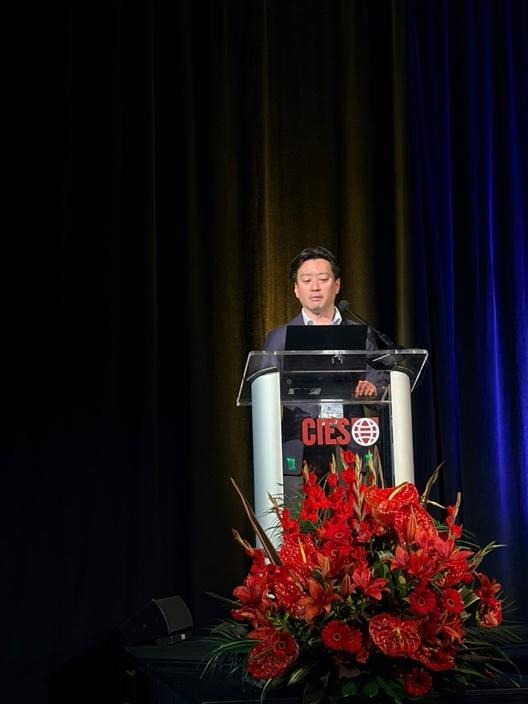
The final day of the conference featured a Presidential Symposium that served as a fitting intellectual close to the week. The session challenged binary and linear frameworks that have long dominated thinking about education in conflict and post-conflict settings — such as the distinctions between education in emergencies versus peacebuilding, or fragility versus stability — arguing that these dichotomies fail to capture the complex realities on the ground. Drawing on perspectives from international education, conflict resolution, and peacebuilding, panelists explored how organizations, systems, and actors navigate the intersections of power, politics, justice, identity, and agency in conflict-affected societies. The symposium made a compelling case that education is a dynamic, non-linear process, and that sustainable peace must embrace plurality, complexity, and coexistence rather than simple transitions from conflict to peace.
This session was particularly relevant to my reconciliation research. A presentation by Dr. Utsumi offered thought-provoking insights into how the failure of state governance gives rise to community-led educational interventions — a theme that resonated directly with my ongoing project in Myanmar, where I am exploring community-established universities that have emerged to fill the void in higher education following the military coup. Another presentation by Dr.Brehm, titled “Repatriation or Political Theatre? How the Return of Stolen Artefacts Can Distort History but Support Reconciliation,” introduced a compelling and provocative argument — that while the repatriation of stolen cultural artifacts can serve as a meaningful pathway to reconciliation, such initiatives may simultaneously distort historical narratives and are not always driven by noble intentions, complicating straightforward notions of restorative justice.