1. The Program
The Summer Intensive Program in September 2025 was full of meaningful and stimulating events. Among the activities were the courtesy visit to the Japanese embassy in Washington, D.C., lectures and discussions, the event titled “From Hiroshima to Hope: A Call for a Nuclear Arms-Free World” at George Mason University, and the visit to the National Museum of African American History and Culture.
2. The Japanese Embassy in Washington, D.C.
At the Japanese embassy, Counsellor Sagisaka kindly explained the history of Japan-U.S. relations. It was very impressive to learn how the transnational communications of the two countries have developed mutual trust over the years. The embassy building, established in 1931, is very elegant with the neo Georgian style. I was overwhelmed with emotions to imagine how the building witnessed the Japan-U.S. relationship, both in wartime and in the postwar periods. We were guided to the tea house in the embassy site. The tea house assumed such a serene and peaceful atmosphere.
3. Lectures and Advice at George Mason University
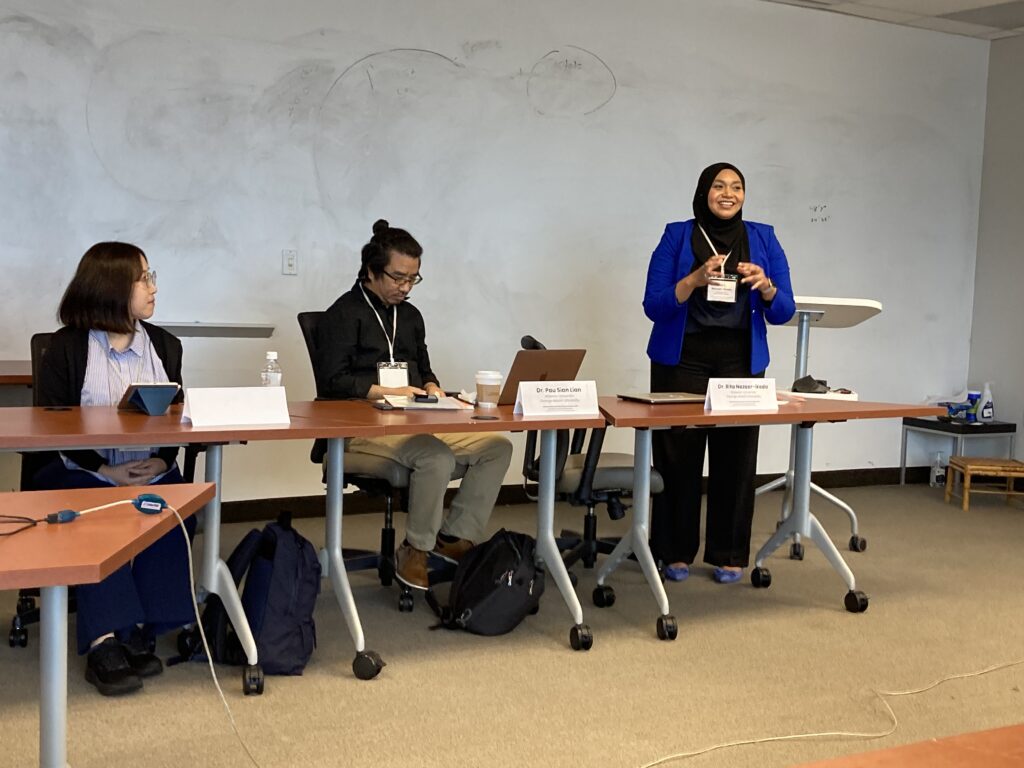
Lectures by Professor Marc Gopin, Professor Karina Korosterlina, Professor Daniel Rothbart, and Professor Jeff Helsing at George Mason University were all so deep and stimulating. They enriched my understanding of the notion of reconciliation and the methodology of reconciliation studies. It was also encouraging for me that the conceptual framework of “embedded relationship” was evaluated as meaningful and good by Professor Gopin and Professor Rothbart. The concept of embedded relationship was originally proposed by Professor Keiko Sakai to explain diverse causes of tensions and conflicts in the Middle East. The Gender/Ethnicity Study Group plans to use it as a central concept to analyze reconciliation processes in many parts of the world in the forthcoming edited volume. Embedded relationship refers to the presence of neglected or forgotten dynamics of certain social groups in the process of reconciliation. Professor Gopin and Professor Rothbart advised me on how to make the use of the concept of embedded relationship more sophisticated in understanding reconciliation processes. Among the viewpoints suggested are: (1) It is important to see the origins of categorization of social groups in embedded relationship and to examine any possibilities of manipulation or a power relationship in embedded relationship; (2) the dynamism of embedded relationship should be analyzed with consideration of emotions, such as rage, hatred, and humiliation; (3) human rights norms involving the categorization of social groups should be understood in the concrete context of history and memory; (4) the possibility of the presence of the third party on top of the conflicting parties in categorization should be considered; and (5) we should note that embedded relationship could change over time. The lecture on compassionate reasoning by Professor Marc Gopin was valuable for my thought on the role of perpetrators in reconciliation, more specifically for the research of Japanʼs reconciliation with other Asian nations. Professor Gopin introduced the notion of compassionate reasoning, which extends the individualʼs habituated practices of compassionate thought and experiences to practical reasoning about ethical principles in society. Compassionate reasoning enables patriotism to coexist with prosocial attitudes.
Professor Gopin pointed out that compassion differs from empathy and that empathy can lead to antisocial reactions, partly due to empathyʼs intense attention to a victim as the target of empathy. In connecting compassion with practical reasoning and social norms and attitudes, Professor Gopin emphasized the importance of finding common points among conflicting parties, rather than showing empathy to one side, as seen in several attempts to resolve the Israel-Palestine conflict. What binds the two sides needs to be examined. Accordingly, the question of how to incorporate the perpetrator into a reconciliation process depends on whether a common goal of reconciliation and a common vision of the
future can be examined. He also warned that humiliation can cause polarization and become destructive to the reconciliation process. He maintains that human values, whether individual or collective, need to be respected. In response to my question about how to strike a balance between the mourning of the wartime Japanese soldiers and Japanʼs remorse, Professor Gopin noted the importance of patriotism, instead of nationalism, in the mourning of the soldiers. Professor Gopin emphasized the importance of embracing both the past and the future. While we do not need to be either hateful or shameful about the past, psychological efforts to realize a common future are crucial. In his statement, I have found the importance that Japanese be patriotic with a healthy sense of self-criticism, thus avoiding being reduced to self-justifying nationalism.
4. The National Museum of African American History and Culture
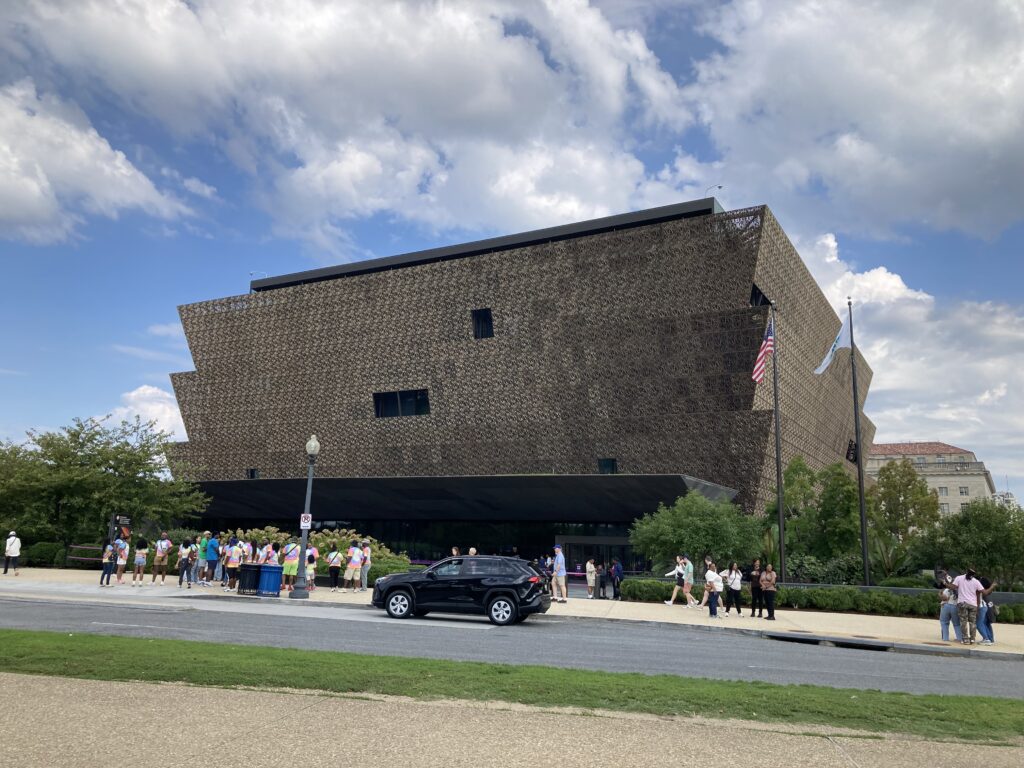
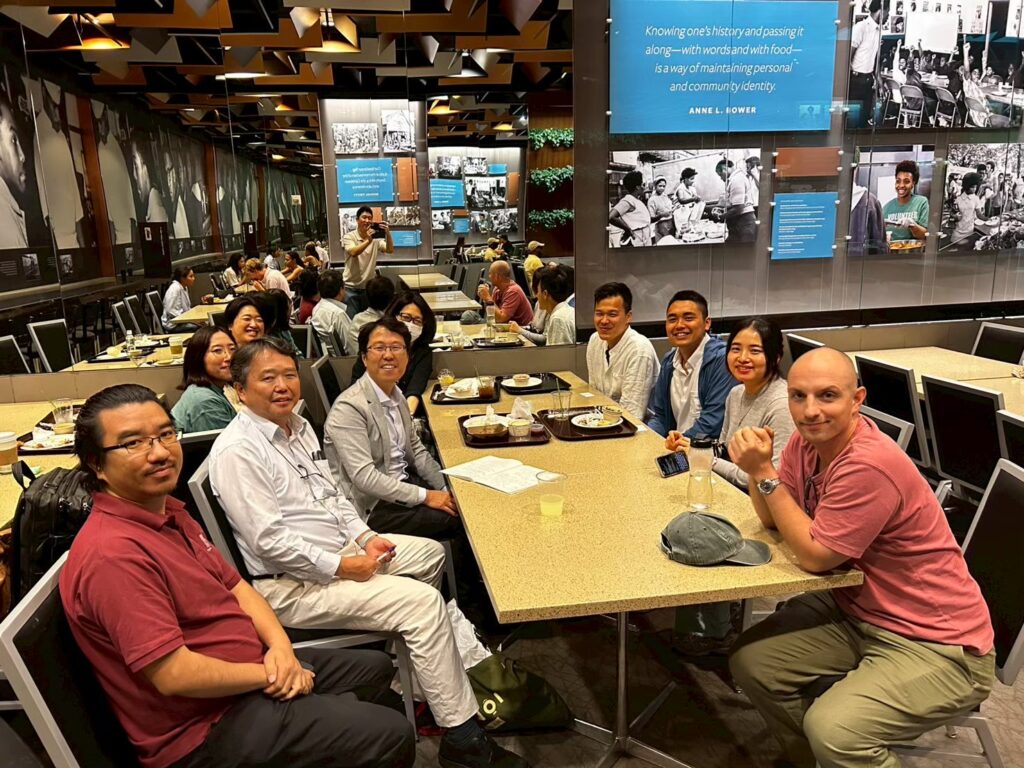
The National Museum of African American History and Culture was a very memorable place. After my visit, I was ashamed that I had originally expected the exhibition to be all about combatting racial discrimination in American society. The exhibition surely includes the history and episodes of the Atlantic slave trade, slavery on the American continents, the emancipation movement, and the civil rights movement. But the museum also taught me how African Americans proactively drove those movements and furthermore contributed to American society in diverse ways. The exhibition has convinced me of great human progress. Still, I cannot help feeling the incompleteness of the mission to end racial discrimination, as seen in the spread of the Black Lives Matter movement in 2020. I find it noteworthy that it took more than eighty years for the museum to be established after the idea of establishing a tribute to African American contributions to American history was born in 1915. It was in 2003 when the Congress approved the plan. Other memorials and museums were erected during the period. During the lunch in the museum cafeteria, we had a chance to receive insights from Professor Toshihiro Higuchi of Georgetown University. He lucidly explained that diverse political and economic factors, apart from the normative influence of human rights movements, functioned to prompt the emancipation movement and the abolishment of slavery in the United States. This taught me the importance of the strategic aspects of
human norm creation and proliferation.
5. My Gratitude
All in all, the experiences and learning in the Summer Intensive Program significantly enriched and stimulated my thought. I will not lose any time in utilizing the learning from the program for my research. Lastly but not least, I would like to express my gratitude to those who planned, prepared, and executed the summer program. In particular, Professor Toyomi Asano as the International Reconciliation Project leader, Professor Karina Korostelina at George Mason University, Dr. Hiroko Gawacuhi and Dr. Hajime Onozaka as junior researchers at Waseda University, and Ms. Shima Asami at the Waseda Institute of Political Eocnomy.
My special thanks go to Dr. Rita Nazeer-Ikeda, who prepared the whole program for more than six months. Her professional and intellectual leadership, with a great sense of humor, made the summer program truly meaningful and smoothly executed. I would also like to express my gratitude to Dr. Nazeer-Ikedaʼs whole family for their warm and wholehearted hospitality in which all the participants enjoyed a pleasant and unforgettable evening.