1.Introduction
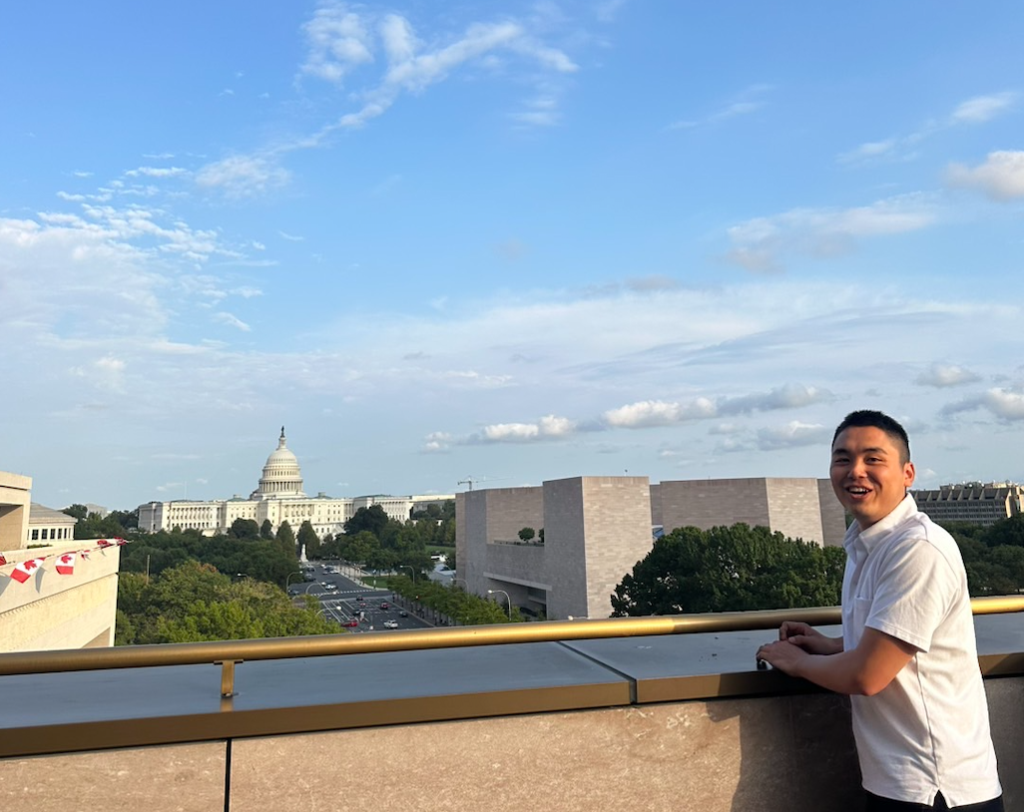
This year’s Summer School of the International Reconciliation Studies Project was held in Washington, D.C., the heart of policymaking in the United States, for about a week starting on September 16th. In taking part in this program, I set my own theme: “International Reconciliation and National Values.” In International Reconciliation Studies, international conflicts in East Asia are analyzed with attention to the dynamics of nation-building that shape nation-states, which are understood not as fixed entities but as variable ones. Within this framework, national values are consistently treated as crucial variables, requiring more concrete examination.
It was therefore significant that this year’s Summer School was held in the United States, a country known (though sometimes with a hint of irony today) as the “land of freedom,” with a firm national value anchored in that idea. Taking into account its strong patriotism symbolized by the waving Stars and Stripes, I approached this Summer School with the intention of reexamining international reconciliation through the lens of national values.
Indeed, I was able to engage on-site for seven days, with the main component being a joint research workshop with the Carter School at George Mason University (GMU). In addition, I had the opportunity to visit the Embassy of Japan, the German Marshall Fund, as well as numerous museums and monuments in Washington, D.C. In the following sections, I will introduce aspects of what I learned during this period, focusing particularly on those most relevant to my chosen theme.
2.The Struggle over the “Meaning” of National Values: At the National Museum of African American History and Culture
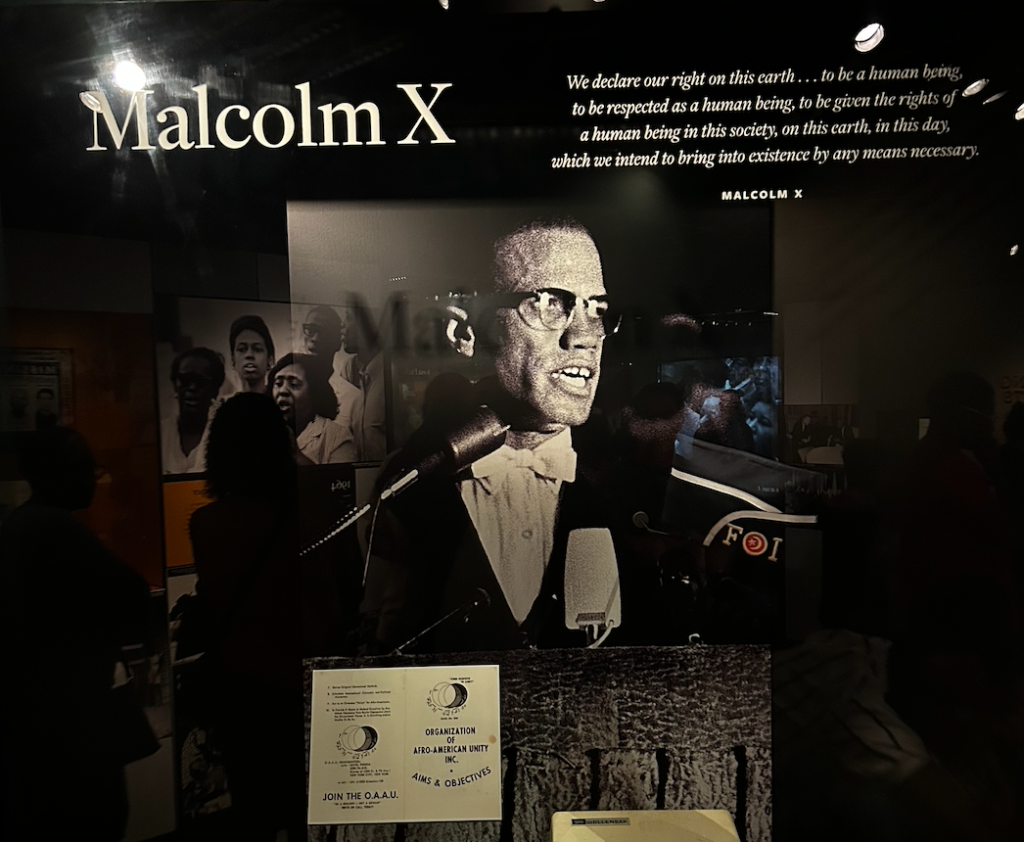
Washington, D.C. is home to a wide range of memorials, and as part of this program, I visited the Lincoln Memorial, the World War II Memorial, the Holocaust Memorial Museum, and the Korean War Veterans Memorial, among others. Through these experiences, what particularly captured my interest was the National Museum of African American History and Culture. I was especially struck by the historical narrative tracing a series of “histories of resistance”: from the founding of the United States and the drafting of its Constitution in the late 18th century, through the Fourteenth Amendment and the 1896 Plessy v. Ferguson decision, to the Civil Rights Movement and the Black Lives Matter movement.
The history of racial discrimination is generally framed as a story of “resistance to injustice,” and indeed, the museum’s exhibits as a whole conveyed that perspective. However, I attempted to reinterpret it from the standpoint of national values. In other words, I understood this “history of resistance” also as a struggle over national values, in particular, over the meaning of the value of “equality” in the United States, the so-called land of freedom. Within the historical debates surrounding racial discrimination, at the root of all discourses lies the unshakable national value that “the US is the land of freedom, and all people are equal here.” The essence of the controversy, therefore, was the question: “Who are the ‘people,’ and what does ‘equality’ mean?” Put differently, it was a struggle over the meaning of values expressed in specific terms. The museum vividly displayed how, although the terminology had remained unchanged since the country’s founding, its meaning had been contested throughout American history.
This point carries important implications for International Reconciliation Studies. The phenomenon suggests that values such as “peace” or “prosperity” in Japan, or “resistance” or “independence” in South Korea, are not immune to similar transformations of meaning over time. Even if the words representing national values remain consistent, their meanings may shift, and this very mutability can open up possibilities for reconciliation.
In this regard, the museum presented several noteworthy cases where resistance involved an attempt to abandon national values altogether. A typical example was the group that emerged after the 1896 Plessy decision, which sought to reject the U.S. Constitution itself. Their discourse held that “since this Constitution does not protect us, it is unjust, and therefore we renounce it.” Likewise, in the case of Malcolm X, whose series of movements were sometimes characterized as extremist, it remained unclear whether his activism was connected to American national values or proclaimed as an antithesis to them. Analyzing such cases in greater detail may help us clarify how domestic conflicts relate to national values, as well as the conditions under which such phenomena occur.
3.Research Presentation: An Overview and Significance of the Japan–Korea Cultural Property Issue, and Domestic Value Conflicts
On the seventh day of the Summer School, September 22nd, I had the opportunity to present my research together with other members of the project, as part of George Mason University’s annual Peace Week. Each of us was allotted 10 minutes, which forced us to be selective in what we could cover, but it was a valuable chance to present to an audience we do not usually encounter.
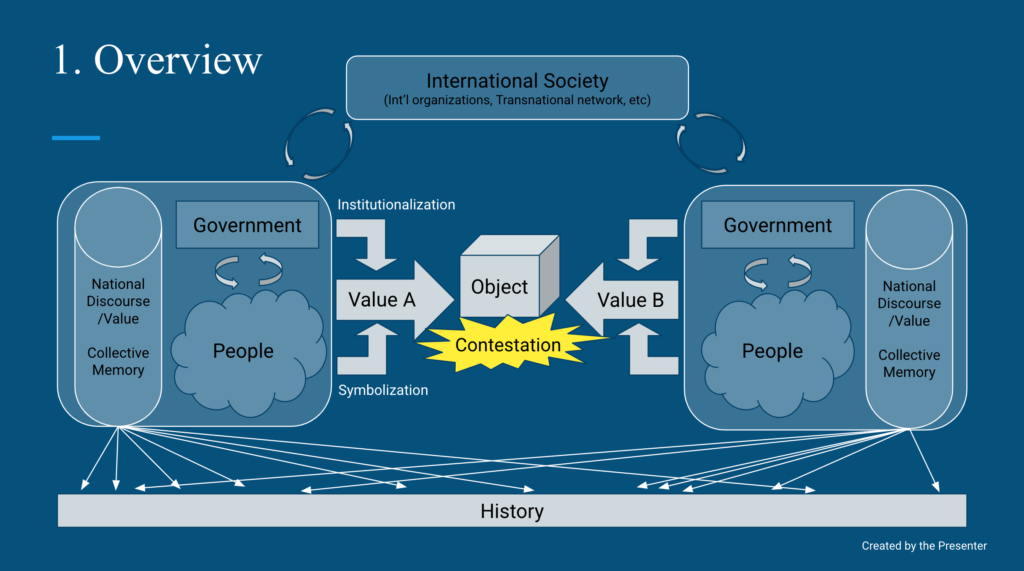
My presentation focused on the Japan–South Korea cultural property issue. Taking into account both the time constraints and the interests of the audience, I spoke less about specific details of my individual research and instead offered a broad perspective on the overall contours of the issue and its significance. Beginning with the premise that cultural properties are collectively assigned value and constructed at the intersubjective level, I outlined how they have been deeply intertwined with the dynamics of nation-state formation since modern times. I then moved into the Japan–South Korea context, arguing that the cultural property issue essentially poses the question: “Has the Japan–ROK relationship undergone decolonization?” As a broader implication for reconciliation studies, I raised the question: “Are cultural properties merely products of national value, or can they also serve to transform national value itself?” In the latter half, I discussed the relationship between historical recognition, collective memory, and the values or narratives attached to cultural properties in both Japan and South Korea. Using diagrams, I argued that the cultural property issue can be understood as a clash between the nation-building dynamics of the two countries.
The discussant was Professor Karina Korostelina of GMU, well-known for her work on Identity-Based Conflict. She generously praised the topic as highly engaging for the study of reconciliation, while also advising that discussions should not only include international value conflicts but also domestic ones. Although my presentation did not address this point, I fully agreed with its importance. Moreover, it resonated directly with the concerns I had developed during the earlier part of the Summer School, reinforcing that this is an area I want to explore more deeply in future research.
Indeed, even within the domestic dimension of the Japan–South Korea cultural property issue, one can find multiple instances where different values are assigned. For example, regarding the well-known “Ogura Collection,” the values assigned by the Tokyo National Museum and art experts differ from those emphasized by civic activist groups calling for its return to Korea. Furthermore, in Narashino City, Chiba Prefecture, where the collection was temporarily kept, yet another set of values was discovered. Clarifying how these are linked to national values or their meanings, and how they ultimately clash as international disputes, emerged as a clear agenda for my future work.
Going back to some days before the presentation day, I should also mention the joint research workshop with GMU held on September 18th. Professor Daniel Rothbart raised philosophical questions in considering reconciliation, one of which was ontological. He stressed the need to revisit how terms commonly used in practice and research (e.g., personhood, community, nation, humanity, etc) are understood. He encouraged us to examine how such social and political categories shape people’s perceptions and condition their understanding of phenomena.
Reflecting on the museum visit, my own presentation, and the feedback I received, I came to recognize the need to revisit the very concept of value, which lies at the core of International Reconciliation Studies. This means not only building a solid foundation for research, but also grappling with issues such as the intersection of national and universal values, or the distinctions often made between so-called personal and social values. I realized that I have yet to fully explore how I, as a researcher, understand the concept of value, and how it is understood socially and politically. Moreover, this perspective may help explain certain aspects of the Japan–South Korea cultural property issue, such as cases where even partial “returns” are not accepted as “reconciliation,” by shedding light on the underlying dynamics at play.
4.Reaffirming the Position of International Reconciliation Studies: The Significance of Coming to Washington, D.C.
The fact that this Summer School was held in Washington, D.C. itself carried significance. Somewhat unexpectedly, it was through experiences outside the GMU campus that I felt this most strongly. In a single phrase, the significance lay in “being able to sense the positioning of International Reconciliation Studies.”
During a session at the Embassy of Japan, I asked a question regarding the collective memories of Japan and the United States concerning shared historical events. Though it was a highly sensitive subject, I was grateful to receive a thoughtful response from the official. At the same time, however, the answer made me keenly aware of the differences between academic problem awareness and practical concerns in the field. Naturally, International Reconciliation Studies, being a discipline tied to practice, must remain “grounded” and avoid drifting into armchair theorizing. Yet, I also came to feel that our study should transcend the necessarily limited scope of practical perspectives and instead approach international conflicts from a broader vantage point.
A few days later, at the German Marshall Fund, I was able to hear firsthand how practitioners at the very center of policymaking in Washington, D.C. perceive International Reconciliation Studies. Once again, it was clear that, putting it mildly, it was difficult to imagine this field of study influencing policy in the near future. It seemed unlikely to resonate with people in Washington.
This impression was further reinforced in a private conversation during a free afternoon with a friend of mine who studies International Relations at a prestigious American university, from the conventional “hard power”-centered perspective. From her, I received a skeptical assessment of the premises and approaches of International Reconciliation Studies. In her words, “The study of reconciliation looks like cleaning up the diplomatic failures of security and trade.” Compared to analyses of military and economic power, research focused on collective memory and national values seemed to her “conceptual, abstract, and armchair debate,” which, from the standpoint of someone deeply immersed in traditional International Relations, understandably felt alien.
As is well known, the constructivist approach on which International Reconciliation Studies draws developed as an attempt to address phenomena that traditional International Relations theories could not explain, such as the collapse of the Soviet Union, the Iraq War, or the U.S. military presence in Afghanistan. The conventional understanding of the state as a fixed entity both failed to account for such cases and ran into limits in identifying the root causes of international conflicts. Precisely in order to overcome these limitations, research in International Reconciliation Studies has advanced by adopting constructivist perspectives. Being in Washington, D.C. gave me the chance to once again realize this significance, while also raising for me the question of how to foster mutual understanding and cooperation with scholars working within traditional paradigms. In this sense, receiving critiques of International Reconciliation Studies from other fields helped clarify its positioning for me personally. That realization, gained not from within my daily research institute, but by traveling all the way to Washington, D.C., is where I found the true significance of this experience.
5.Conclusion
The above represents only a portion of what I learned during the Summer School. Being exposed to themes and perspectives that I would not normally encounter, I felt that, although I am still far from being a fully developed researcher, my intellectual capacity as a scholar has expanded. As someone engaged in International Reconciliation Studies, a highly transdisciplinary field premised on multiple forms of justice, I deeply realized the importance of learning in diverse environments.
Earlier, I mentioned some of the skeptical voices regarding International Reconciliation Studies. Personally, I regard these as extremely valuable critiques, and I am grateful to everyone who generously shared their frank opinions. International Reconciliation Studies is still in a developmental phase, evolving and deepening, and precisely because of this, I hope to continue engaging proactively with those who hold critical or less understanding perspectives.
Incidentally, our return journey was prolonged due to a canceled flight, which allowed me time to reflect deeply on what I had learned during this trip. Through days of American food, I even re-recognized the importance of vegetables (and, humorously, argued that ketchup counts as a vegetable because it comes from tomatoes). Observing myself in this way, I realized that I was “actively attributing meaning” to the peculiar circumstances of my experience. In contrast, the collective memories and meanings associated with nation-states do not necessarily involve such arbitrary interpretations. For example, the history of racial discrimination in the United States, which has been transformed into collective memory as a story of “resistance to injustice,” was not imposed top-down by authorities. Rather, it emerged from the lived experiences of ordinary people, who over time connected that history with the national values unconsciously nurtured in their daily lives. Similarly, the memory of Hiroshima in Japan has been shaped through the same dynamics and continues to be conveyed to this day. This raises questions about how historical events become linked with particular meanings and transformed into collective memory, while also suggesting approaches to history and reconciliation that differ from mere “forgetting.”
Finally, I would like to express my heartfelt gratitude to all those who made this opportunity possible. I am especially thankful to Professor Toyomi Asano, who leads the International Reconciliation Studies Project, to Dr. Rita Z. Nazeer-Ikeda, who flawlessly organized and managed this program, to the GMU faculty who provided valuable feedback, and to my project colleagues, who, despite the challenges of jet-lag and a demanding schedule, collaborated in an inspiring and cooperative manner.