

Between 16 and 25 September 2025, I had the opportunity to participate in the IIRS Summer Research Program organized by the Institute of International Reconciliation Studies, Comprehensive Research Organization, Waseda University.
Held in Washington, D.C., and Arlington, Virginia, the program offered a wide range of academic and field-based activities, including lectures at the Carter School for Peace and Conflict Resolution at George Mason University, a briefing on current Japan–U.S. relations at the Embassy of Japan, and a seminar at the German Marshall Fund of the United States. It also included visits to the United States Holocaust Memorial Museum, the National Museum of African American History and Culture, and several war memorials on the National Mall.
This report reflects on the experience through three themes: the lectures at the Carter School, my research presentation during Peace Week, and the study tour of war memorials.
1. Lectures at the Carter School for Peace and Conflict Resolution
The lectures offered at the Carter School for Peace and Conflict Resolution provided an important opportunity to reconsider the meaning of reconciliation from a conceptual and philosophical perspective. Over two days, Professors Marc Gopin, Karina Korostelina, Daniel Rothbart, and Jeffrey Helsing delivered lectures on various aspects of conflict resolution and reconciliation. In this section, I focus on the lecture by Professor Daniel Rothbart, whose analysis of the South African Truth and Reconciliation Commission (TRC) offered significant conceptual insight for my own research.
Professor Rothbart examined the philosophical foundations of reconciliation by analyzing the South African Truth and Reconciliation Commission (TRC) as a prototype case. In his lecture, he defined reconciliation not as a final outcome but as a process of transformation aimed at repairing morally damaged relationships among individuals, groups, and nations after acts of wrongdoing. This definition offered an important clue for considering what reconciliation is and what it means for reconciliation to be “achieved.” Rather than understanding reconciliation as a static condition that may someday be achieved, this framing suggests that actors’ continual engagement in an ongoing practice can itself be regarded as reconciliation.
One point that particularly stood out to me in the lecture was Professor Rothbart’s discussion of a statement by President Nelson Mandela quoted from the TRC’s official report. Mandela stated: “All of us, as a nation that has newly found itself, share in the shame at the capacity of human beings of any race or language group to be inhumane to other human beings. We should all share in the commitment to a South Africa in which that will never happen again.” (Truth and Reconciliation Commissions of South Africa Report: Volume One, p. 30.)
Professor Rothbart emphasized that the core of Mandela’s message was a call to reflect on the complicity of social systems—economic, political, and cultural—in enabling wrongdoing. By shifting attention from individual perpetrators to the broader structures that shape wrongdoing, Mandela sought to challenge and move beyond the conventional perpetrator–victim binary.
Since reconciliation is directed toward overcoming the past, the existence of perpetrators and victims in the past cannot be undone. Yet if we move away from a rigid perpetrator–victim dichotomy and instead understand all actors as members of a shared social system, it becomes possible to engage everyone—perpetrators, victims, and bystanders alike—in reconciliation as an ongoing practice carried out in the present.
While Mandela’s statement sought to foster unity within the South African nation, his appeal to understand all actors in reconciliation as “we” carries a broader implication: it invites reflection on the possibility of transcending group boundaries in other contexts as well.
The need for reconciliation arises from the past, and the idea of reconciliation is oriented toward the future. However, it is the continuous practice undertaken by “us” in the present that is essential to reconciliation. Professor Rothbart’s lecture provided valuable theoretical insight for thinking about reconciliation in this way and will continue to inform my case-based research moving forward.
2. Research Presentation During Peace Week at the Carter School
On 22 September, I delivered a research presentation at Peace Week, an event hosted by the Carter School for Peace and Conflict Resolution. My presentation, titled “How Japanese Civil Society Reacted to Diplomatic Normalization with Divided Vietnam in the 1950s and 1970s,” examined two moments in Japan–Vietnam relations: Japan’s war reparations to the Republic of Vietnam (South Vietnam) in the 1950s and the economic assistance provided to the Democratic Republic of Vietnam (North Vietnam) as part of diplomatic normalization in the 1970s.
In the presentation, I argued that although these two cases differed in form—formal war reparations in the 1950s and economic assistance in the 1970s—both shared a structural limitation inherent in government-to-government reconciliation. In each case, the agreements prioritized economic development over historical responsibility and were carried out without explicitly acknowledging Japan’s wartime wrongdoing.
In examining these two moments of government-to-government reconciliation, I also considered how Japanese civil society responded to them. Japanese civil society criticized these government-level agreements; however, their protests were directed primarily at the Japan–U.S. alliance rather than at Japan’s own responsibility vis-à-vis Vietnam. As a result, issues of war memory and war responsibility remained largely unexamined within Japan–Vietnam relations.
In closing, I posed the following question: when past wrongdoing between two groups remains unaddressed, does maintaining silence in the name of stability contribute to reconciliation, or does revisiting and reexamining the past bring us closer to reconciliation?
Because I had prepared my presentation before attending Professor Rothbart’s lecture, I was not fully able to incorporate the insights I later gained from his discussion. Reflecting on my own concluding question, I realized that it concerns how reconciliation is defined—whether as a “state” or as a “process.” If reconciliation is understood as an achievable state, then leaving past wrongdoing unspoken in order to preserve calm might be interpreted as contributing to reconciliation. In contrast, if reconciliation is understood as a process, it requires that we, in the present, recognize past wrongdoing as a shared concern and engage in ongoing efforts to repair morally damaged relationships.
Through both the lecture and the opportunity to present my research, I came to recognize that future inquiry must examine how Japanese and Vietnamese actors today perceive and respond to past wrongdoing.
3. Study Tour of War Memorials
The study tour of war memorials provided an opportunity to reflect on how the United States remembers the Korean War, World War II, and, in particular, the Vietnam War. What struck me most at the Korean War Veterans Memorial and the National World War II Memorial was the explicit framing of these conflicts as “wars fought for freedom.” The inscription “FREEDOM IS NOT FREE” at the far end of the Korean War Veterans Memorial stands as a powerful statement of this narrative.
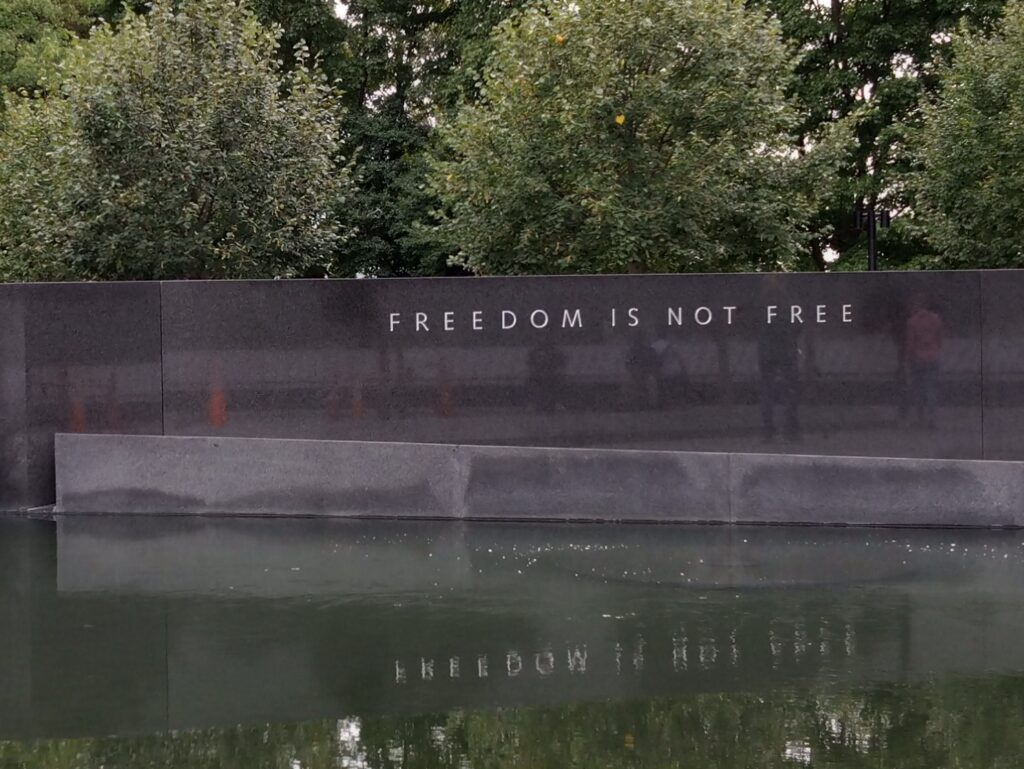
Figure 1. Korean War Veterans Memorial, Washington, D.C.
As a researcher on Vietnam, the word “freedom” immediately brings to mind Hồ Chí Minh’s well-known statement, “Nothing is more precious than independence and freedom,” a slogan issued in 1966 to mobilize the population during the Vietnam War—referred to in Vietnam as the Resistance War Against the Americans. It also recalls the Vietnamese Declaration of Independence, proclaimed on 2 September 1945, which explicitly drew upon the United States Declaration of Independence and the French Declaration of the Rights of Man and of the Citizen in asserting that all people have the right to Life, Liberty, and the pursuit of Happiness. Even today, official documents of the Socialist Republic of Vietnam display the triad “Independence – Freedom – Happiness” at the top. In this sense, “freedom” is not only a foundational national value for the United States but also a core principle in modern Vietnamese political discourse.
In this context, the Vietnam War can be seen not only as a civil war within Vietnam and as one of the “hot battles” of the Cold War, but also as a confrontation over competing understandings of “freedom.” For the U.S. side, the war was framed as a defense of the “free world” against the expansion of communism. For the Vietnamese revolutionary forces, the war was framed as a struggle to secure national independence and freedom from great-power interference.
As I approached the Vietnam Veterans Memorial with these reflections in mind, I was struck by the different impression it made on me compared to the Korean War Veterans Memorial. Whereas the Korean War Veterans Memorial displays numerical inscriptions—such as the number of those killed or missing—and prominently features the slogan “FREEDOM IS NOT FREE,” the Vietnam Veterans Memorial consists solely of a long, black wall engraved with thousands of individual names.
This mode of commemoration, rather than highlighting collective sacrifice or national achievement, foregrounds individual loss and personal grief. It may reflect the distinctive place of the Vietnam War in the United States: a bitter and uncelebrated memory.
Later, keychains sold at the gift shop on the National Mall further reinforced this impression. The keychain labeled “Korean War Veterans Memorial” depicts the Korean Peninsula divided into North and South Korea, with each side marked by its respective national flag—visually highlighting the boundary preserved through the war and emphasizing the United States’ role in defending “freedom” south of the 38th parallel.
In contrast, the keychain labeled “Vietnam Veterans Memorial” treats Vietnam itself merely as a background image. The only elements shown in color are an American soldier’s combat boots, a rose placed within them, and the U.S. flag. The design uses Vietnam simply as the stage on which American sacrifice and personal loss are foregrounded.
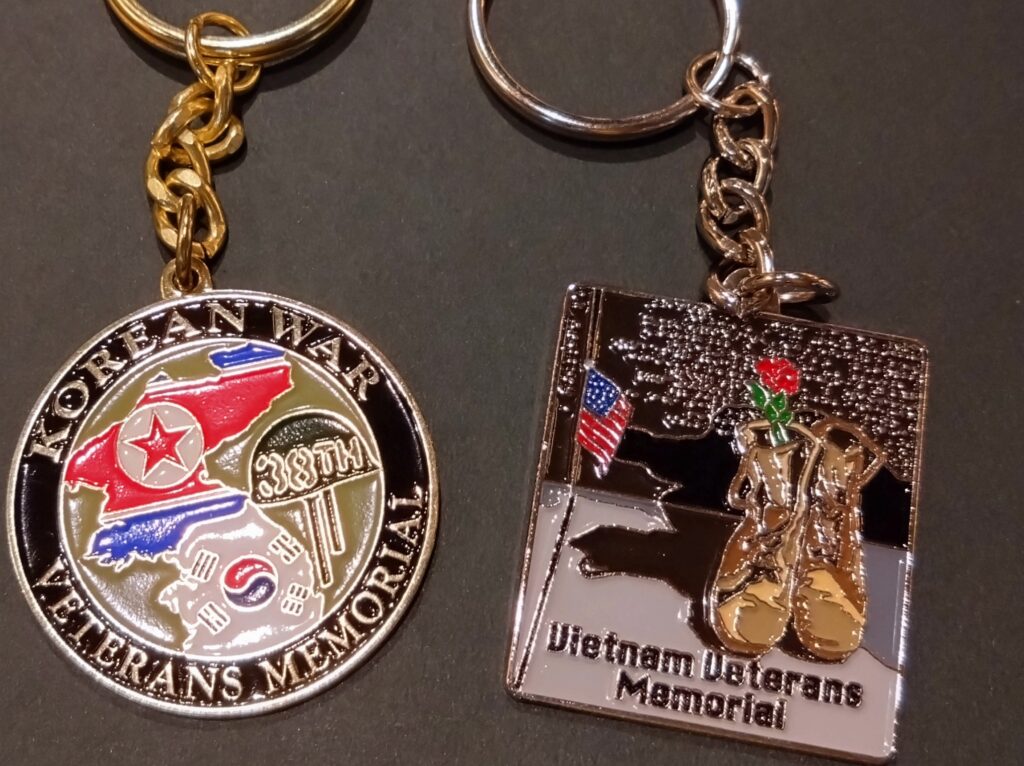
Figure 2. Keychains labeled “Korean War Veterans Memorial” and “Vietnam Veterans Memorial”
This impression—that the Vietnam War is remembered in the United States primarily through the lens of sacrifice and loss—was further reinforced by an unexpected discovery. While walking near the Carter School one afternoon, I came across a small memorial standing quietly in a neighborhood park. Beneath the inscription “Arlington casualties incurred by United States military personnel in connection with the conflict in,” the stone lists the names of local residents who died in “KOREA” and “VIETNAM.” Unlike major national monuments that could evoke patriotic sentiment, this small community memorial seems to serve simply as a place of quiet remembrance for individual sacrifice and loss.
The visits to these memorials prompted me to reflect on how the Vietnam War is remembered in the United States. The American memorials I encountered—whether major national monuments or small community memorials—consistently foregrounded individual sacrifice and personal loss. This stands in contrast to practices of commemoration in Vietnam, where fallen soldiers (liệt sĩ) are honored as heroes whose deaths are incorporated into sacred narratives and national collective memory. Although the meaning of the war differs between the two countries—making a straightforward comparison inappropriate—the contrast is nonetheless striking: in Vietnam, hero-martyr commemoration has been mobilized, to some extent, to reinforce nationalism and legitimize the authority of the Communist Party, whereas U.S. memorials emphasize the individuality of sacrifice and loss.
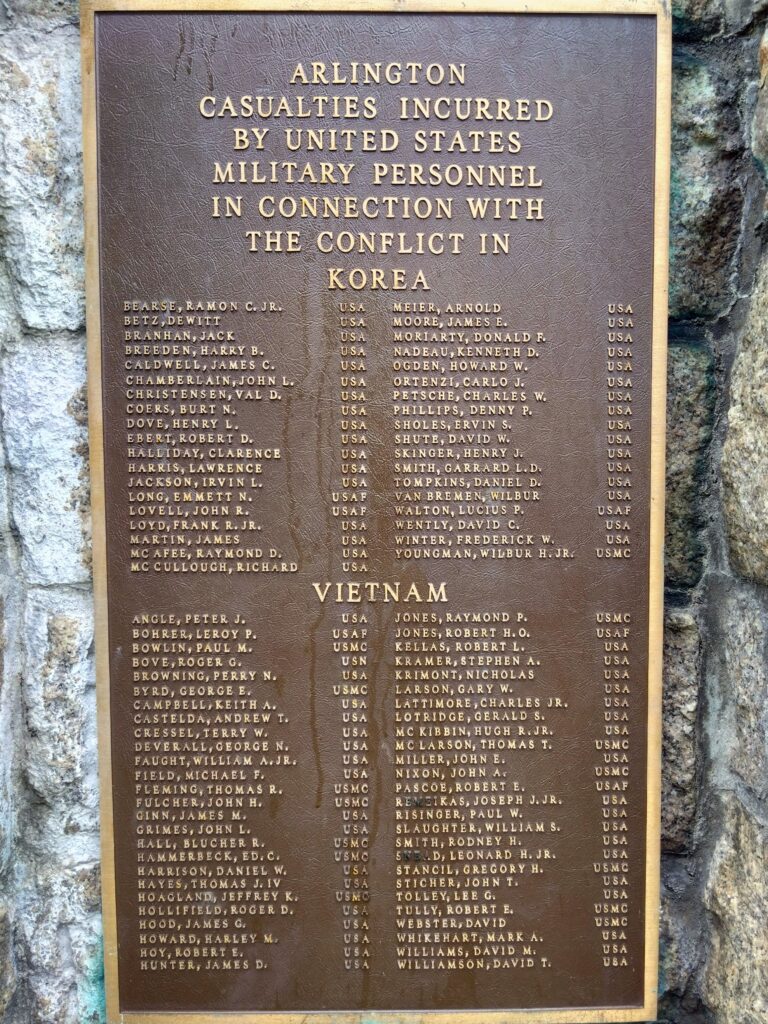
Figure 3. Local memorial for Arlington residents who died in the Korean and Vietnam Wars
Revisiting these contrasting modes of remembrance also brings into view another group whose experiences fit into neither memory framework: the soldiers of the Republic of Vietnam (South Vietnam) who fought alongside U.S. forces. These individuals are excluded from public commemoration in both countries. As fifty years have passed since the end of the Vietnam War in 1975, their experiences—unrecognized as “memories to be remembered” by either state—likely persist only within family memory. How such memories will be preserved, or allowed to fade, remains an open question. For me, as a researcher of Vietnamese history, this observation underscored the importance of engaging with these marginalized layers of memory.
Through the lectures, the research presentation, and the study tour of war memorials, the IIRS Summer Research Program 2025 provided a valuable opportunity to deepen my reflections on reconciliation, freedom, and the memory of war. I would like to express my sincere gratitude to everyone who made this invaluable experience possible.