Arrival
To initiate a new phase of research at the Jena Center for Reconciliation Studies (JCRS), I relocated from my home in Tokyo. Having published a monograph based on my doctoral dissertation, I decided to take this as a turning point and dispose of most of my belongings. When I arrived in Jena in October, it was still daylight saving time, with a seven-hour time difference from Tokyo. After a period of living day and night reversed in Tokyo, I found myself waking up in the mornings in Jena—perhaps a sign of improved daily rhythms.
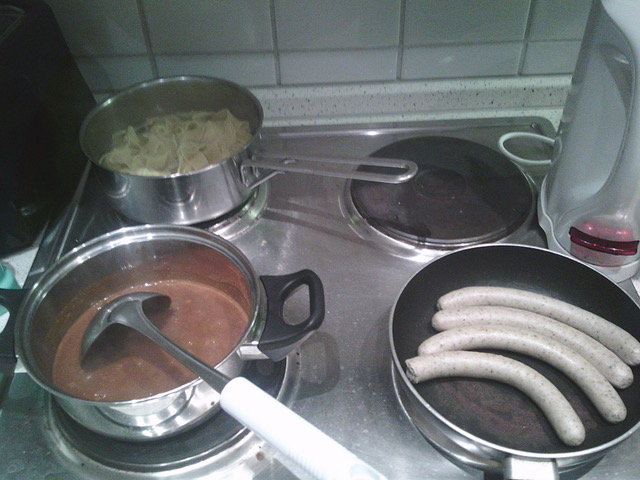
A visit to the supermarket provides vegetables, sausages, pasta, and sauces, which I can grill or simmer using the electric cooker in the guesthouse. Compared to my Tokyo stay—where I relied heavily on fast food and had not even contracted gas service—this feels much more like a proper “life.”
That said, even after leaving Japan and what I thought were unpleasant memories behind, I discovered that memories resurface precisely when one tries to discard them. (I tend to forget what I have written in my own books, which causes panic during book review sessions.)
It is often said that when one consciously tries to forget something, the very act of pointing at it in one’s mind ensures that it remains remembered. Through the hectic preparations for departure and the administrative procedures required for living abroad, I became increasingly interested in such psychological issues. Looking back, many of my memories evoke anger, but as I reflected on these issues, I became aware of my own inadequacies and pursued research with a sense of frustration and regret. I sometimes wonder how long research driven by such emotions can last. As the phrase goes, “I upset myself about it.” There seems to be little progress.
A War Memorial from the First World War as a Point of Departure
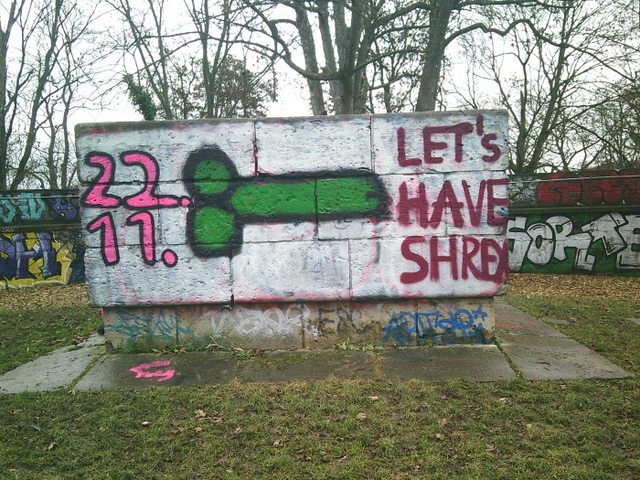
While thinking about these matters, I took walks along Forstweg, where the guesthouse is located, and contemplated German history since 1918 as I looked at a First World War memorial covered in lacquer paint graffiti. One of the drawings appears to depict male genitalia. Women’s suffrage during the Weimar period was introduced immediately after the war, at a time when many men had died as soldiers. Although women’s legal rights expanded, the fact that female voters outnumbered male voters became one source of resentment among conservative men, contributing to persistent anti-feminist sentiment. I found myself wondering whether that crude drawing might bear some relation to this historical context.
At the beginning of November, I decided to study the German November Revolution of 1918 and purchased an e-book and audiobook of Robert Gerwarth’s The Greatest Revolution in History. As I struggled to keep up with the audio, marking conjunctions and comparatives, I learned that while classical scholarship often framed Weimar democracy primarily as a prehistory of the Nazi regime, more recent research has reassessed the pragmatic political leadership of the Social Democratic Party. At the time, the party was attacked from both the nationalist right and the revolutionary left, and the economic and diplomatic difficulties of the Weimar period were often attributed to its alleged incompetence—an interpretation that also shaped historical scholarship.
This is sometimes dismissed as a pitfall of history based on documentary sources, but the degree to which historians become absorbed in contemporary perspectives should not be underestimated. Even research on the history of the German Communist Party by the so-called “1968 generation,” though differing from current orthodox views, remains worth revisiting.
Of course, it is significant that historical scholarship has eventually arrived at a more balanced evaluation of Social Democratic leadership in the Weimar period. Yet this leads us to a fundamental question: if the Weimar Republic was not merely a prelude to Nazism but possessed an advanced and stable political system, how did its democracy and commitment to international cooperation nevertheless collapse? From this point, when considering the rise of the Nazi regime, I am reminded of Japanese historiography that sought to understand the 1920s and 1930s as a continuous process—a body of research developed from the late 1980s to the early 2000s. I regret having disposed of those books, but recalling them may suffice for now.
With this in mind, I began reading Richard J. Evans’s The Third Reich trilogy. I have reached the section describing the May 1933 repression of the Institute for Sexual Science in Berlin, where pioneering research on transgender issues was destroyed. The significance of this work, and the sheer brutality of what actually occurred, is strikingly tangible for contemporary readers. This is because present-day discrimination against transgender people closely retraces this history. The term “book burning,” unless referring to its ancient Chinese origin, primarily denotes the destruction of books under the Nazi regime. It is fundamentally different from the suspension of sales of books containing discriminatory content. I recall being shocked several years ago in Japan by a discriminatory article against transgender people that misused this heavy historical term.
The Transdisciplinary Environment at JCRS
Although I have spoken about the history and present of discrimination against transgender people in connection with my study of Nazi Germany, the focus of this article is not on those who perpetuate such discrimination. Rather, I wish to emphasize the importance of transdisciplinary research as experienced at JCRS.
In particular, I believe that for those in the “postdoctoral” stage—individuals who have worked to acquire the themes and methods of a specific discipline and, in fortunate cases such as mine, obtained a doctoral degree—it is essential to go beyond one’s previous knowledge and abilities and engage in transdisciplinary research as the next step. Although my stay has only been about two months, I have encountered a wide range of research: the history of reconciliation studies in Professor Laura Villanueva’s course; case studies of reconciliation after the Colombian civil war; discussions among JCRS members on the Vatican’s engagement with human rights issues; and, during Jena’s Reconciliation Week, topics ranging from psychology and digital technology to the significance of Israel–Palestine dialogue initiatives based in Germany.
What left a particularly strong impression on me was the contrast between psychology’s attempt to approach victims’ inner experiences and history’s analysis of political processes. Given the complexity of real-world conflicts and reconciliation, no single discipline can be omnipotent. It is likely that there is no all-purpose “transdisciplinary method” either.
In such a research environment, seriously considering how to present one’s own research and how to foster lively discussion afterward makes it clear that one cannot rely on the inertia of doctoral training. Just as I disposed of my home, I need to make a concerted effort to transform my former self. With a resolve akin to replacing the Old Testament law with the New Testament gospel—seeking the cross—I hope to move forward.
Knowing that JCRS Director Professor Martin Leiner is a specialist in the German-Swiss theologian Karl Barth, it is not merely because I became interested in reconciliation studies through reading Barth’s Epistle to the Romans. Rather, listening to Professor Leiner’s presentations, grounded in his extensive experience synthesizing transdisciplinary research at JCRS, has prompted me to reflect on my post-dissertation trajectory. At the workshop held at Waseda University on February 8, 2024, where Professors Leiner and Villanueva were invited, I heard the name of Thomas Müntzer. Jena is located in Thuringia, a region associated with Müntzer and the history of the German Peasants’ War. Since then, with the continued support of Professor Leiner and Professor Villanueva, I am deeply grateful for the opportunity to pursue my research at JCRS.
This column is published once every three months. In future installments, I plan to address the following topics:
- Psychology and History
- Ethnicity, Class, and Gender
- Global Labor History