

I attended the 7th Annual Conference of the International Association for Reconciliation Studies (IARS), held in Nicosia, Cyprus, from June 19 to 22, 2026. Because this conference was held in Cyprus — and more specifically in Nicosia — the theme of reconciliation felt quite tangible. In the divided city of Nicosia, the UN Buffer Zone is an integral part of the actual urban landscape, and people move between the two sides through checkpoints on a daily basis. Because of this, from the very beginning of the conference, I felt that reconciliation is not merely a matter of political agreement, but is also connected to place, memory, and everyday life.
The title of my presentation was “Remembering One’s Own ‘Genocide’ in the Homeland: Lithuanian Collective Memory in the Diaspora.” In this presentation, I examined how the Lithuanian diaspora in the United States during the Cold War period represented the Soviet deportations and political oppression of Lithuanians as “genocide.” I also discussed how this framework of memory later connected to the collective memory of post-Soviet Lithuania.
The presentation focused primarily on the “Genocide Exhibitions” organized by American Lithuanians from the 1950s through the 1970s. These exhibitions used photographs, documents, maps, and explanatory texts to illustrate the suffering of Lithuanians under Soviet rule. However, what I wanted to emphasize in my presentation was that these exhibitions were not merely venues for remembrance. They were also deeply intertwined with Cold War politics. In 1970, a large-scale exhibition was held in Chicago, where Congressman Gerald Ford, who later became Vice President and then President of the United States, delivered a speech. In his address, Ford linked the suffering of Lithuanians under Soviet rule to the Vietnam War. At the time, some within the anti-war movement criticized U.S. actions in Vietnam as genocide. In response, prominent politicians — including Ford — and Lithuanian-American organizations turned the argument on its head, asserting that communism was the true cause of “genocide.” In this way, the memory of Soviet violence in Lithuania was also linked to U.S. anti-communist politics.
Having one’s own suffering acknowledged can be important for reconciliation. At the same time, however, when a community remembers the past almost exclusively through the lens of its own victimhood, there may be less room to recognize the suffering of others. The case of the Lithuanian diaspora demonstrates how discourses of memory formed outside the homeland later returned to Lithuania and influenced the way the memory of Soviet rule was constructed.
During the Q&A session, I received particularly insightful comments and questions. First, one comment noted that my presentation connected Eastern Europe, North America, and Southeast Asia, making it an interesting case study in global history. I was grateful for this observation, as that was precisely the point I had intended to make. Lithuanian discourse surrounding the Soviet “genocide” was not constructed solely within the context of Lithuanian national history. It was formed in exile, spread through diaspora organizations, entered the lexicon of American politics, and was even linked to the Vietnam War.
Second, when linking my research to the issue of reconciliation, I was asked whether I was considering reconciliation between Lithuania and Russia, or reconciliation between the Lithuanian and Russian-speaking populations within Lithuania. I replied that while both levels are important, they must be considered separately. Memories of Soviet rule are indeed inseparable from the relationship between Lithuania and Russia. At the same time, however, it is also necessary to examine how various groups are positioned within Lithuanian society in terms of public memory, education, and museum exhibitions. In response to this question, I felt the need to think more carefully about what “reconciliation” specifically means in the context of the Lithuanian case.
After the conference, on the day I was returning to Lithuania, I visited the village of Pyla, located about a 20-minute drive from Larnaca. Pyla is situated within the UN Buffer Zone and is known as a village where Greek Cypriots and Turkish Cypriots live together. Since I had just attended a conference on the theme of reconciliation, I wanted to see this place for myself.
What struck me was that Pyla was not simply a place that could be called a “symbol of reconciliation.” To my eyes, it was also just an ordinary village. There were houses, shops, and roads, and people were going about their daily lives. At the same time, however, the fact that it lies within the Buffer Zone indicates that this coexistence exists under very specific political conditions. This duality left a strong impression on me.
【Image 1】
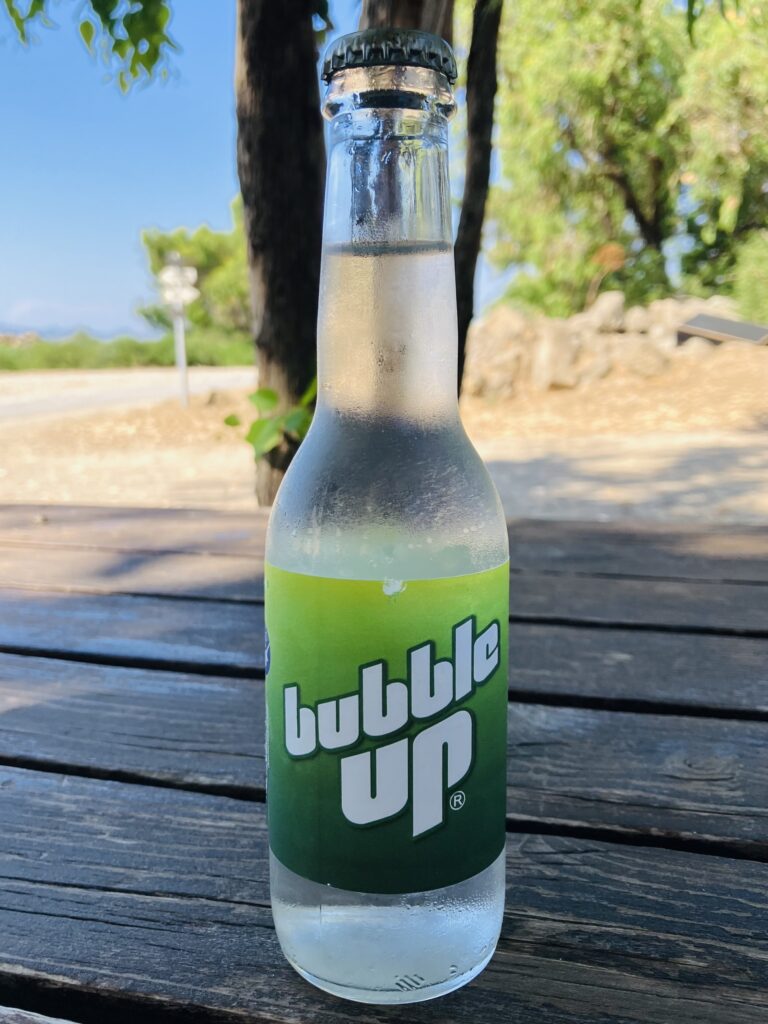
Cyprus once had a variety of soft drink companies, such as Bixi Cola and Bel Cola, but in the mid-1980s, multinational corporations like Pepsi and Coca-Cola entered the Cypriot market and, through unfair competition, bribery, and exclusive distribution agreements, forced many local soft drink manufacturers out of business. Even so, Super Kola’s beverages (photo) are still sold at kiosks in North Cyprus today.
【Image 2】
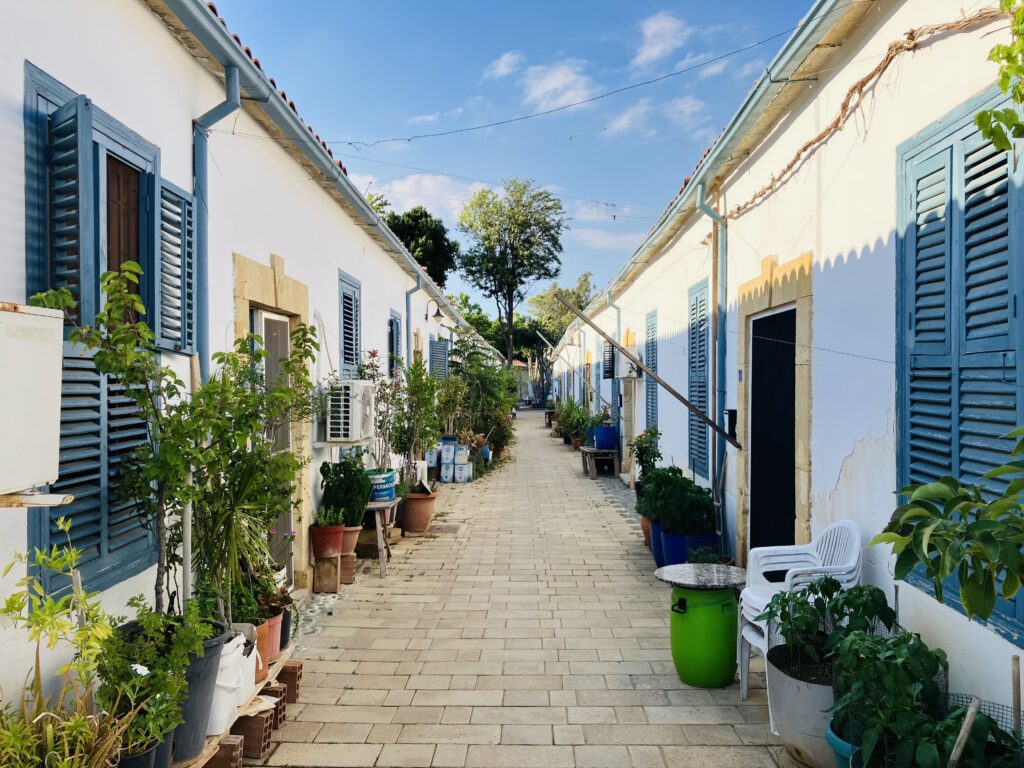
Historical Houses of Samanbahçe Quarter in North Nicosia. It was Cyprus’s first social housing project, held by Ottoman authorities. The Project was initiated in the beginning of the 20th century in order to meet the need for housing within the walled city of Nicosia. It was consisted of 72 houses, which were all constructed using local materials and with careful consideration given to the island’s climatic conditions.