

This 7th annual International Association for Reconciliation Studies (IARS) conference took place in the city of Nicosia in Cyprus from June 19th through the 23rd of 2026 and was well attended by reconciliation scholars from across the globe. Taking place in the immensely interesting and poignant divided capital of Nicosia, this conference centered around the theory and practice of reconciliation could not have been held at a more apt location.
I was given the privilege to present on the second day of the program at the first session in a panel titled “Contested Nation-State Narratives and the Prospects for Reconciliation: Museums, Cultural Property, and the Politics of Representation.” I was joined by my co-presenters Björn Wickman and Keitoku Ikegami both of whom made compelling presentations as well as Kijeong Nam who, as a discussant on our panel, gave some truly thought provoking questions that tied all three of our presentations together in ways that I had not previously considered. One of the questions he posed that really intrigued me was whether there was one strand of “truth” needed between China and Japan before reconciliation could occur, and as all three of our presentations revolve around narratives it would be beneficial to clarify why I think the museums should not follow the “one-true-history” path. I believe that each museum has different perspectives within their exhibits and within modern museulogy there is an emphasis on presenting more open-ended narratives, giving the visitor a chance to come to their own conclusions, albeit a guided one.
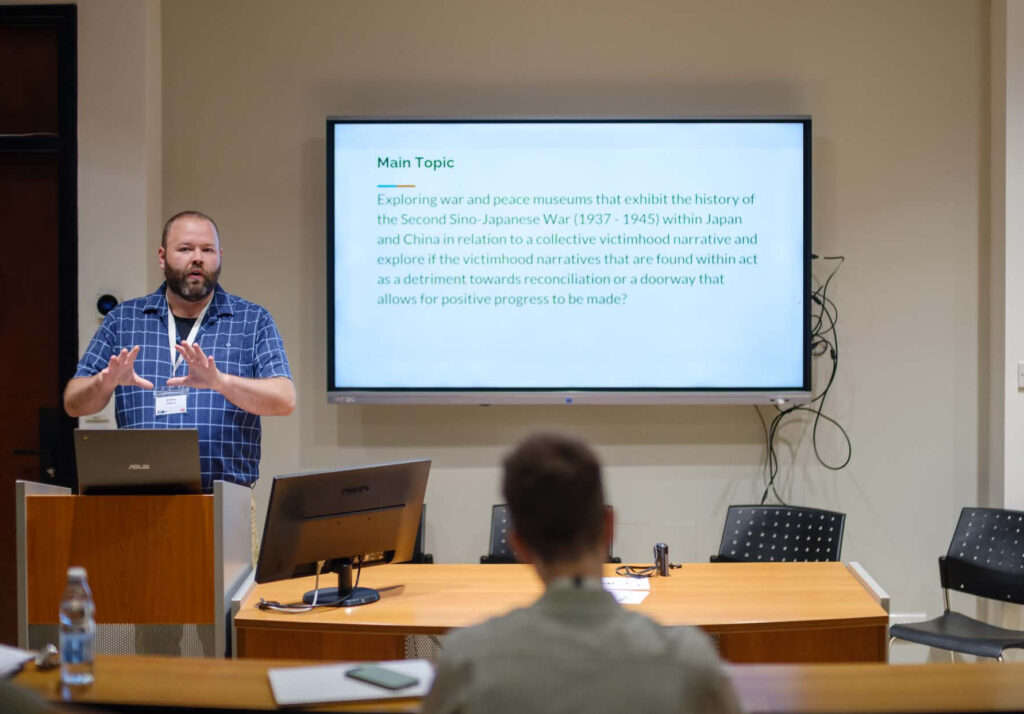
My presentation was titled “Collective Victimhood in Museums: Political Theater or a Desire for Reconciliation?” and at this conference we had just 15 minutes to present our research, and I used every last second of that time. My presentation focused on war and peace museums that exhibit the history of the Second Sino-Japanese War (1937 – 1945) within Japan and China in relation to a collective victimhood narrative and explore if the victimhood narratives that are found within act as a detriment towards reconciliation or a doorway that allows for positive progress to be made? One guiding quote that can encapsulate the direction of my current research is “There’s no grand narrative, there’s no grand counter narrative: there are just a lot of different political positions” (Sunnucks et al., 2020) as the political factors in narrative building within each of the museums can give much insight into the efforts of reconciliation.
Within my presentation I wanted to highlight two important topics: the political influence on museums in both China and Japan, and the importance of also reaching out to an international audience. I use Walter Hatch’s description of Chinese museums following an “authoritarian affirming memory” whereas Japanese museums showing more “democratic, debilitating memories” (Hatch, 2014) with the caveat that both sides have elements of the other, meaning Chinese museums do have differences and are not monolithic whereas the Japanese museums have a tendency to follow some stands across multiple museums. I also highlighted the importance of reaching out to not just the domestic audience but the international one as well. I believe that in the process of reconciliation, it cannot be a one-sided endeavor and museums are situated in a unique space to reach the international audience.
Aside from the presentation and discussion with my panel, the other significant outcome from this conference was making meaningful connections with other academics and practitioners from across reconciliation fields. One such connection that I would like to highlight would be with the Education team from the Waseda reconciliation research group. As a new member of the Global History team, I have had few chances to get to know other groups to any deeper level, but this conference allowed me the opportunity to both understand how education can be a meaningful tool in reconciliation and to give me ideas on how to include some education factors in my own research. Additionally, spending a few days with many of them gave me the chance to get to know them beyond just their topics which I believe is a crucial aspect of meaningful collaboration. As my own topic is on museums, which are inherently educational, furthering my own participation within that group will greatly benefit my work.
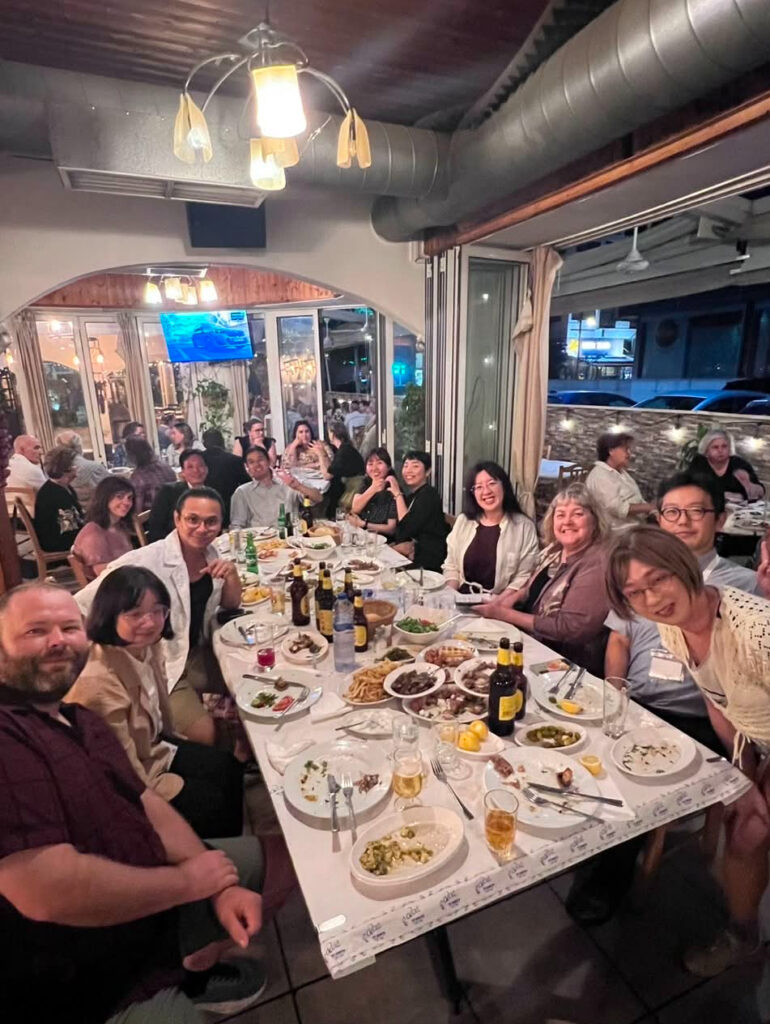
The final thing I would like to discuss is not about the time actively participating in the conference, but the free time when I went out into the city. During the conference we heard many different interpretations and frameworks of reconciliation, but at the end of the day, it can all be boiled down to the feelings and thoughts of ordinary people, and one of the best ways to learn about how the people feel in a new place is to go out and talk to those people. During the free time of the conference I spent time exploring both sides of the city and talking with its people. I sat at cafes and chatted with some immigrants who told me their feelings on living in the city, I spoke with a taxi driver who had driven for 20 years in the country and had a list of recommendations to visit, and I spoke with a waiter on the Turkish-occupied side of the city who talked about how friendly everyone was, no matter what side they came from. People on both sides of the UN-controlled zone had interesting stories to tell and I was eager to listen. While this is only a very brief overview of some of the conversations I had during the few days there, it was immensely valuable to see how everyday life was for people who lived in an actively divided country. Comparing this to my own topic of Chinese and Japanese reconciliation, which the dividing event ended over 80 years ago, is interesting because if people who are actively living in division can find common ground and hold amicable feelings towards the other side, there is hope for a conflict that ended decades prior.
References
Hatch, Walter. “Bloody Memories: affect and effect of World War II museums in China and Japan.” Peace & Change 39, no. 3 (June 13, 2014): 366–94. https://doi.org/10.1111/pech.12078.
Sunnucks, Laura Osorio, Nicola Levell, Anthony Shelton, Motoi Suzuki, Gwyneira Isaac, and Diana E. Marsh. “Interruptions: Challenges and Innovations in Exhibition-Making.” Museum Worlds 8, no. 1 (July 1, 2020): 168–87. https://doi.org/10.3167/armw.2020.080112.