

The 7th Annual Conference of the International Association for Reconciliation Studies (IARS) was held from June 19 to June 22, 2026, at the University of Nicosia, in the heart of Nicosia city, Cyprus. As someone who is still learning about reconciliation, I found it a meaningful experience to attend a conference on this topic in this particular location. On the second day of the conference, I presented a research titled “From International Commitments to Everyday Practice: Inclusive Education and the Local Enactment of Global Reconciliation Norms in Vietnam.” I had fifteen minutes to make my argument that the gap between government policy and what actually happens inside a classroom is not merely a technical shortfall, but a failure of everyday reconciliation.
My presentation first introduced the overall picture of global and domestic commitments to inclusive education. From the international side, Sustainable Development Goal 4 calls on all countries to achieve equitable, inclusive education, and instruments such as the Salamanca Statement (1994) and the UN Convention on the Rights of Persons with Disabilities (CRPD) frame inclusive education as a matter of fundamental rights rather than charity or accommodation. In the case of Vietnam, the government has made considerable effort to engage with this global consensus. Vietnam was the first country in Asia to ratify the UN Convention on the Rights of the Child, in 1991, and it ratified the CRPD in 2015. In 2019, the Law on Education officially stated that inclusive education is the preferred model for students with disabilities. On paper, therefore, the legal commitment is clear. However, Vietnam still ranks in the medium-low band of the Global Inclusivity Index, 83rd worldwide, and as recently as the late 2000s, fewer than one in ten children with disabilities in the country were enrolled in any form of schooling. The distance between international commitment and everyday reality remains wide.
To understand why this gap exists, I focused on Vietnam’s main tool for putting these commitments into classroom practice: the Individualized Education Plan (IEP), regulated since 2018 under Circular 03/2018/TT-BGDĐT. Using Carol Bacchi’s “What’s the Problem Represented to Be?” approach to policy analysis, I argued that the policy itself already treats the IEP as an administrative requirement rather than a teaching tool. The circular explains in detail who must sign an IEP and roughly what form it should take, but it says almost nothing about how a teacher should use it to actually shape lessons. There is no mandatory review, no standard national template, and no mechanism to check whether an IEP is anything more than paperwork. I traced this gap to three factors operating at the same time: teacher-training programs that have rarely systematically taught IEP skills; policy guidance that is scattered across national, provincial, and district levels without coordination; and the national curriculum reform, which standardized learning goals at the same time individualization was becoming more necessary, leaving little room for adaptation. The theoretical contribution of the paper is to read this policy-practice gap through the idea of “everyday reconciliation” — a concept developed by extending reconciliation theory into an ordinary institutional setting. The argument is that a classroom only enacts reconciliation when difference is recognized, accommodated, and valued in practice, not simply when a child with a disability is physically present at a desk. When an IEP becomes paperwork instead of pedagogy, a child’s legal right to education turns into empty compliance instead of real learning. In this sense, reconciliation does not only happen between nations after major conflicts but also happens every day in an ordinary classroom.
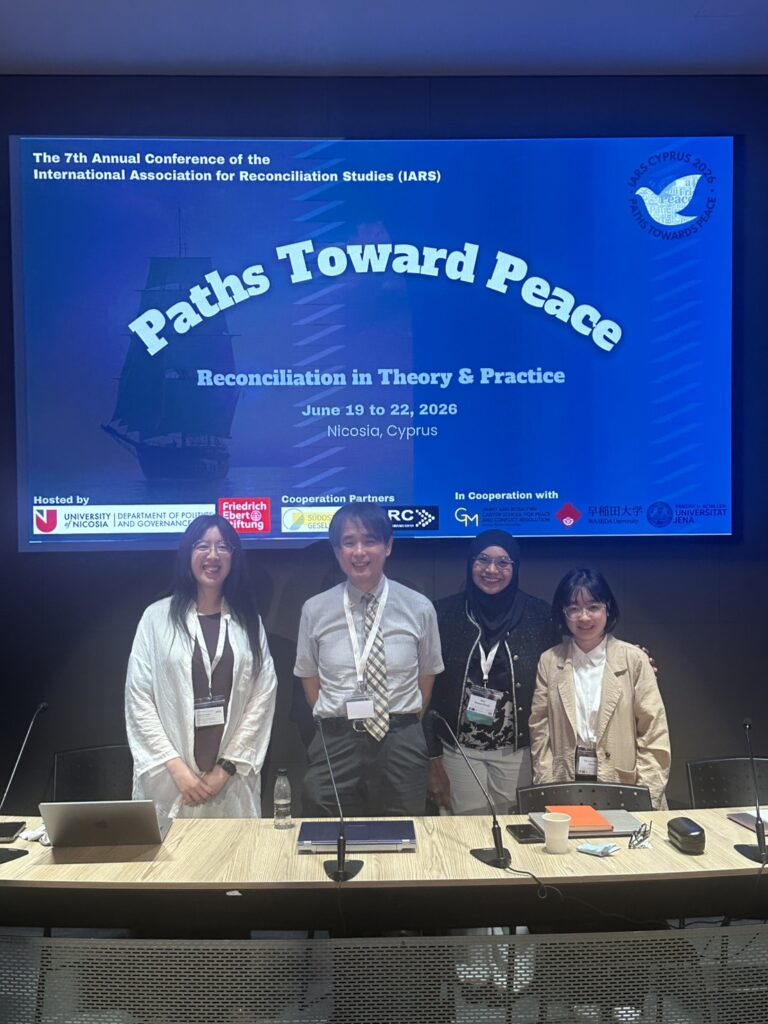
Image 1: My panel, “Lost in Translation? Global Education Norms, Epistemic Knowledge, and Reconciliation in Asia.”
Presenting this argument in Nicosia made it feel more real to me. Cyprus is a place where the distance between a formal peace agreement and everyday, lived reconciliation is something you can actually see in the city, not just read about. One of the sessions that stayed with me the most was Concurrent Session #1b, “It is a Betrayal of our Oath to Stay Silent — The Role of the Medical Community in Genocide Prevention and Human Rights,” presented by members of Doctors Against Genocide. The panel covered an introduction to the organization’s work, evidence of genocide in occupied Palestine, and a discussion on what post-genocide recovery actually requires. What struck me was not just the content but the fact that the people speaking were practitioners first and academics second — doctors who had built an organization because they believed their professional oath required them to act, not only to observe and study.
Besides the academic sessions, we were able to take part in a number of other activities at the conference that enriched my understanding of the reconciliation process in Cyprus. One of the most memorable was an open dialogue between negotiators from both sides of Cyprus, a Greek Cypriot and a Turkish Cypriot negotiator. It was a meaningful and insightful experience for me to see that there are ongoing efforts from both sides toward reconciliation. The film screening “Beyond History Education” also made me reflect further on how differences in how each side teaches its own history can shape how people see and recognize one another, and how that in turn affects the reconciliation process. Another memorable experience was listening to the Bicommunal Choir for Peace on the second day. The choir was founded in 1997 and brings together both Greek Cypriot and Turkish Cypriot musicians to promote dialogue and mutual understanding through music.
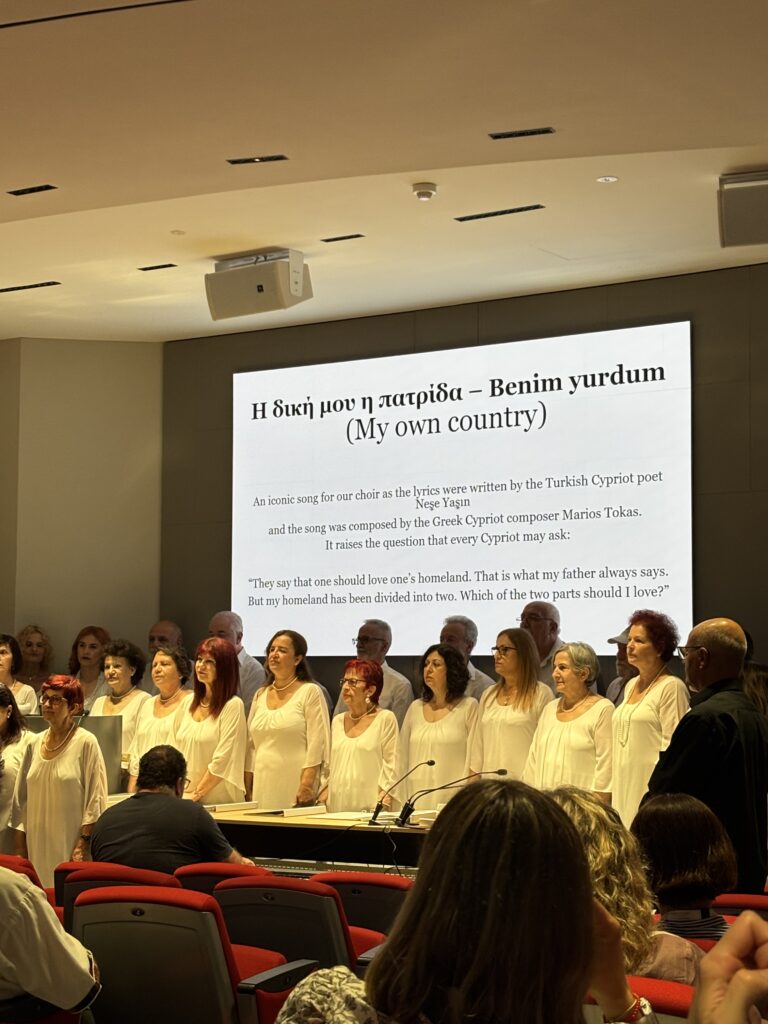
Image 2: The Bicommunal Choir for Peace performing a song called “My Own Country.”
The IARS 2026 conference reminded me that the study of reconciliation is also present in the everyday. Coming back to my research, I have a clearer understanding of the policy gap in Vietnam, and I also feel a stronger sense of responsibility to ask, like the practitioners in the session did, not only what is wrong, but what should be done about it.