

From 19 to 22 June 2026, I had the privilege of participating in and presenting my research at the 7th Annual Conference of the International Association for Reconciliation Studies (IARS), held at the University of Nicosia in the Republic of Cyprus. I would first like to express my sincere gratitude to the International Reconciliation Studies Project (Principal Investigator: Professor Toyomi Asano) for providing us with this valuable opportunity, to the conference organizers for their efforts in hosting the event, and to all participants who offered thoughtful questions and comments during my presentation. Participating in this conference provided an invaluable opportunity to reposition my research within an international and interdisciplinary scholarly dialogue. At the same time, it prompted me to reconsider how the concept of reconciliation, which is a term that inevitably carries normative implications, intersects with, and at times stands in tension with, my empirical research on Japan–Republic of Korea (ROK) relations, a field fundamentally shaped by the historical power asymmetries created through colonial rule. In what follows, I first reflect on my presentation and the discussions that followed, before concluding with several personal observations inspired by my visit to Cyprus.
My presentation, entitled “Cultural Property Issues as a Site of Conflict between Nation-States: A Comparative Analysis of Cases in Japan and the Republic of Korea,” examined the conditions under which cultural property becomes a source of interstate conflict between Japan and the ROK, particularly with regard to disputes over ownership and symbolic meaning. In presentations delivered at the previous IARS conference and other academic meetings, I proposed a theoretical framework drawing upon Laurajane Smith’s concept of Authorized Heritage Discourse (AHD). My argument was that each nation develops its own historically constructed understanding of cultural heritage through processes of nation-building, and that these nationally specific heritage discourses often contain elements that are fundamentally incompatible with one another. Consequently, when a single cultural property becomes incorporated into the competing AHDs of multiple nation-states, it is likely to emerge as an object of international cultural property disputes. My previous analyses primarily focused on cases in which the cultural property concerned had already been incorporated into the AHDs of both Japan and the ROK. In the present study, I sought to test the explanatory power of this theoretical framework by examining a broader range of cases, including those in which the cultural property had been incorporated into neither country’s AHD, or only into that of one country. Through this comparative analysis, I evaluated whether the proposed framework could account for a wider variety of empirical cases.
The findings suggest that cultural property disputes between Japan and the Republic of Korea are most likely to arise when a cultural property is incorporated into the competing Authorized Heritage Discourses of both countries. Taken together with my previous research, the cases examined in this study provide further empirical support for this theoretical proposition.
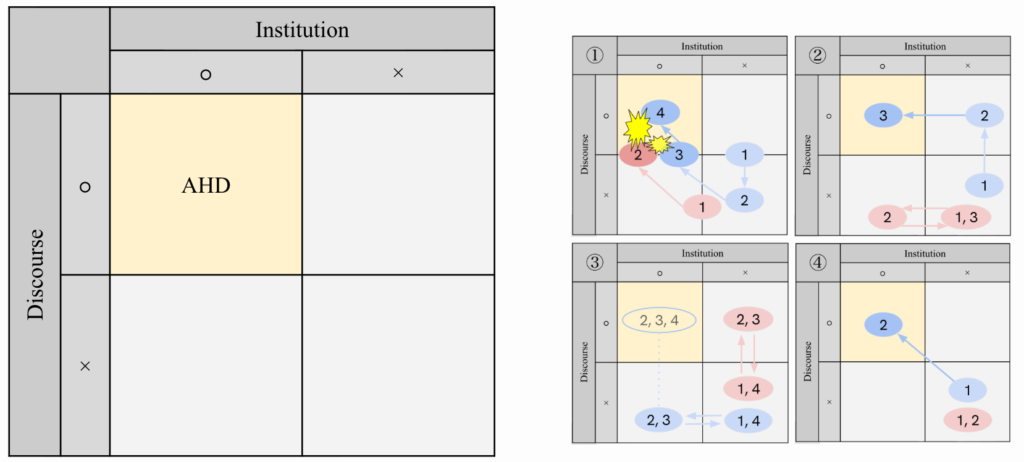
(Figure 1. Conceptual diagrams of the cases analyzed in the presentation. Prepared by the author.)
Professor Nam Ki-jeong, the discussant of my presentation, provided highly insightful comments and questions. Due to space limitations, it is not possible to write all of them in detail here; therefore, I would like to focus on one particularly important point and briefly summarize it. Professor Nam’s question concerned the definition of reconciliation proposed by Professor Toyomi Asano, which I employed in my presentation, particularly the concept of “mutual transformation of actors.” His question was: Why should reconciliation between Japan and the ROK be understood as “mutual transformation”? Considering the historical relationship between Japan and the ROK, which has been shaped by the power asymmetry resulting from colonial rule, Professor Nam pointed out that, in general, expecting equal degrees of change from both sides within an asymmetric relationship may, rather than overcoming inequality, reproduce existing inequalities. In other words, when discussing reconciliation in a relationship that was partly constituted through power asymmetry, the question becomes: Why should reconciliation involve mutual transformation rather than transformation on only one side?
In response, I offered my reflections as a researcher. Of course, drawing a strict distinction between the two is not always easy; however, research can be broadly divided into two categories: empirical and normative research. The former focuses primarily on explaining “what has happened,” while the latter is concerned with pursuing “what ought to be” as an ideal state. My own research as a scholar is fundamentally situated within empirical research, and I position the concept of reconciliation within that framework. In this sense, I am not making a normative argument through my research that Japan and the ROK should mutually transform themselves in order to achieve reconciliation. Rather, my position is that if mutual transformation occurs in some form, and if such transformation contributes to reducing existing conflicts, then that phenomenon can be understood as reconciliation. More specifically, in relation to my presentation, if the respective AHDs of Japan and the ROK transform in ways that make them no longer mutually incompatible, I understand such a process as reconciliation.
However, the mutual transformation discussed here does not imply symmetry in the nature or degree of transformation. To answer Professor Nam’s question directly, at least in the context of Japan–ROK relations, conceptualizing reconciliation as mutual transformation does not mean expecting equal changes from both sides within an asymmetric relationship. Furthermore, the substance of mutual transformation should not be generalized according to hierarchical power relations or categories such as former colonizer and former colony. Rather, it must be examined within each specific historical and political context. The asymmetry originating from colonial rule is certainly an important starting point for considering reconciliation. However, the ways in which such asymmetries continue to operate through institutions, discourses, memories, emotions, and values differ from case to case. Therefore, mutual transformation in reconciliation should not be understood as a concept that requires both sides to change toward a predetermined direction. Rather, it is a concept that enables us to examine how the perceptions, institutions, and structures of narratives that sustain conflictual relationships transform within their respective contexts.
As the historical transformation of the AHDs of both countries clearly demonstrates, there are no immutable actors of the kind that conventional International Relations theories have often assumed. Even actors that may appear to remain the same are continuously and dynamically transformed in response to changes over time. Within this process, if mutual transformations occur through interactions between actors involved in conflicts, leading toward the mitigation of conflicts that have existed previously, I understand such a process as reconciliation. This is the perspective from which I approach reconciliation. In this sense, reconciliation as mutual transformation does not represent an “imposition” of equal change that disregards power asymmetries. (Such an approach has often been described as “reconciliation as violence.”) Rather, it is a perspective for understanding the process through which multiple actors constituting a relationship transform themselves in different ways, while recognizing existing asymmetrical relationships, and through which previously conflictual relationships are at least partially reconfigured.
From this perspective on reconciliation, my experience of walking through the island of Cyprus, where the conference was held, was also highly suggestive. On the island of Cyprus, no large-scale conflict involving direct violence has occurred for approximately half a century. However, with the United Nations Green Line (buffer zone) functioning as a physical boundary, clearly antagonistic actors continued to exist on both sides. In the Greek Cypriot side, there was a memorial dedicated to those who went missing during past military conflicts, accompanied by the Greek flag. On the other hand, on the Turkish Cypriot side, there was the “Barbarian Museum,” a facility that explicitly identifies a particular actor as “barbarian.” It was evident that these two sides remain in a relationship of incompatibility at present. At the same time, it is also a fact that various initiatives for “reconciliation” exist, including civic movements led by media professionals and the activities of bodies such as the Technical Committee. What became apparent through this experience was that not only “nation-states” as actors, but also actors existing within them, as well as actors operating across boundaries, are continuously transforming themselves while being embedded within the dynamics of conflict and reconciliation.
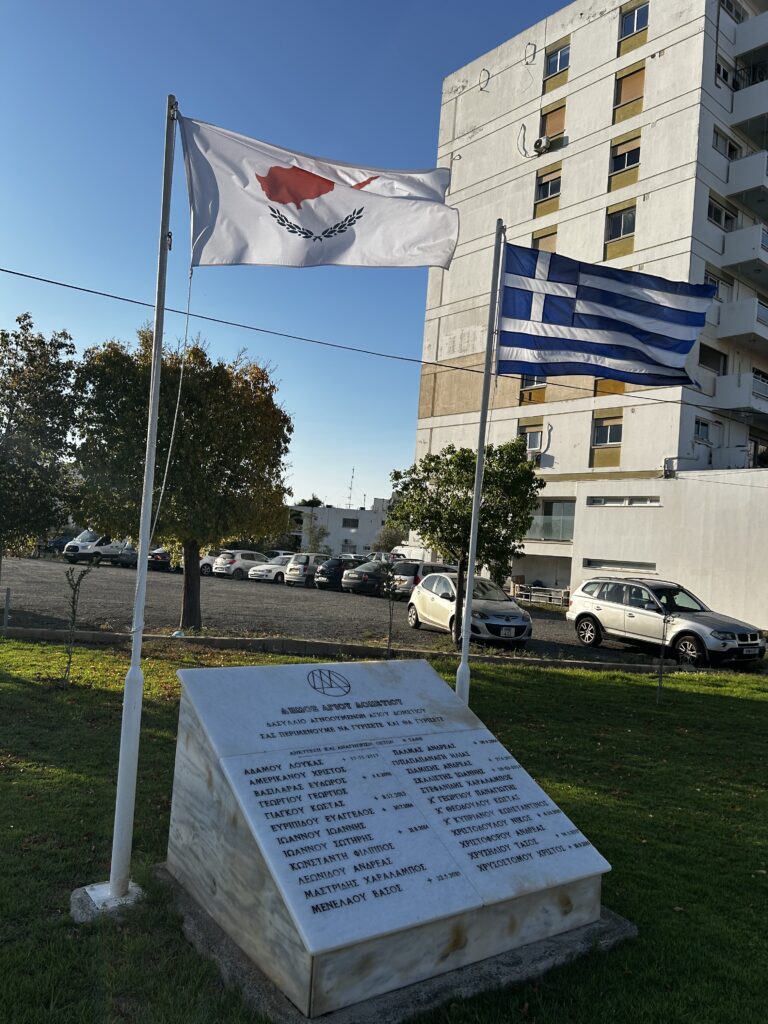
(Figure 2. Memorial commemorating missing persons on the Greek Cypriot side)
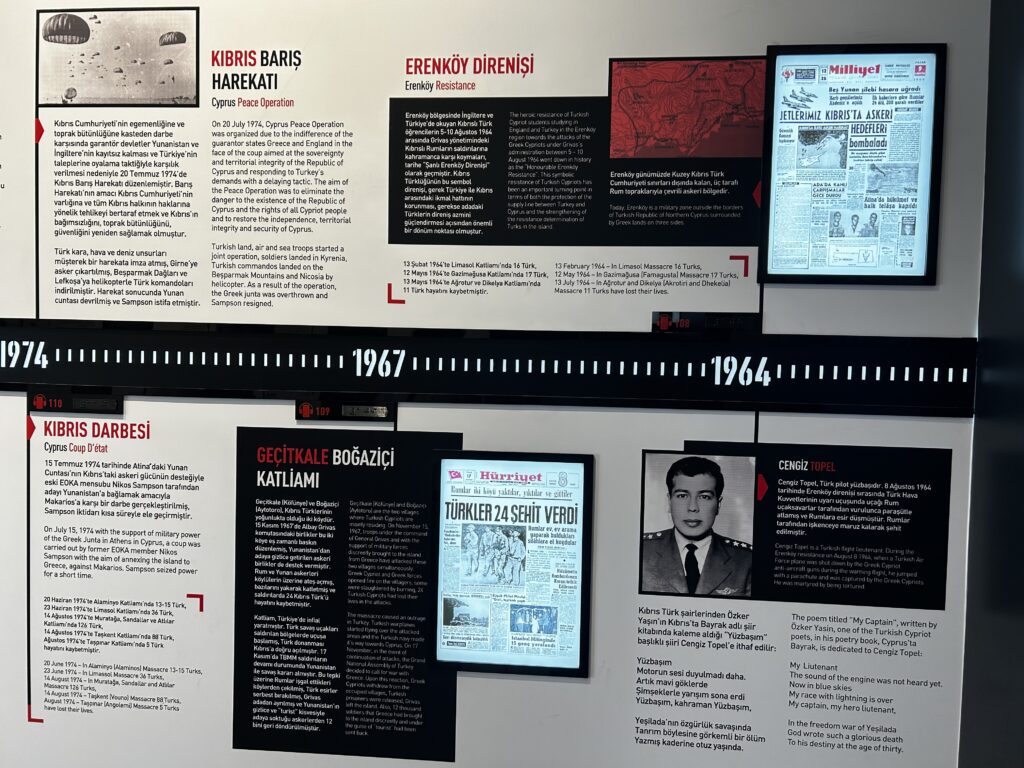
(Figure 3. Exhibition panel at the Barbarian Museum on the Turkish Cypriot side)
As researchers positioned as “third parties,” we cannot easily make normative claims regarding such situations. However, as someone who studies reconciliation, I believe it is possible to reflect upon the question of under what conditions reconciliation as mutual transformation might become possible. Such reflection can be pursued by considering the history of Cyprus in dialogue with insights gained from East Asia and other regions. Furthermore, my experience during this visit made me realize that there are many aspects from which East Asia can learn through the case of Cyprus. The International Reconciliation Studies Project itself is an attempt to reconnect reconciliation studies, as a field of conflict resolution emerging from East Asia, with broader international academic discussions. In this sense, the opportunity I unexpectedly gained in Cyprus, the very place where the conference was held, to reconsider the concept of “reconciliation as mutual transformation” and examine its applicability beyond East Asia did not seem to be merely a coincidence.