

1.Introduction
In June 2026, I participated in the 7th Annual Conference of the International Association of Reconciliation Studies (IARS), held in Nicosia, Republic of Cyprus. This was my second time attending the conference, following the 2025 conference in Seoul, and it once again provided a valuable opportunity to reflect on both the theory and practice of reconciliation.
Through my participation in the International Reconciliation Studies Project, I have sought to reconsider South Korea’s efforts to address past injustices from the perspective of reconciliation. I have been particularly interested in why problems, narratives, and demands persist even after people and memories that had long been excluded by the state and society are formally recognized by the state.
At this year’s conference, I examined the Geochang Massacre, in which a large number of civilians were killed by the South Korean military during the Korean War. I considered why the issue did not come to an end even after the 1996 enactment of the Special Measures Act on the Restoration of Honor for Persons Related to the Geochang Incident, which led to the official recognition of victims and the restoration of their honor.
Cyprus has also remained effectively divided between north and south since 1974. Although its historical background differs from that of Korea, Cyprus faces the challenge of how people with different historical understandings and identities can rebuild their relationships. The conference gave me an opportunity to reconsider what connects people with different pasts within the same society, whether reconciliation is possible without reaching a shared understanding of the past, and, more fundamentally, what reconciliation itself means.
2.Why Do People Continue to Speak after State Recognition?
My research has focused on the Donghak Peasant War, which took place in Korea in 1894. The defeated peasant forces were long regarded as “rebels,” and their descendants found it difficult to speak publicly about their ancestors.
This evaluation changed significantly during the process of democratization from the 1980s onward. The Donghak Peasant War came to be reinterpreted as a movement in which ordinary people sought to transform society through their own actions, and the descendants began to demand that the state restore the honor of their ancestors. As a result, a special law was enacted in 2004, and the Donghak Peasant War was formally recognized as an important event in the formation of modern Korea.
Nevertheless, the descendants did not stop telling their stories. At the 2025 IARS conference, I focused on why they continued to speak about their ancestors even after state recognition had been achieved. What became clear was that speaking about one’s ancestors was not simply a means of making demands on the state. For people who had long been forced into silence, it was also a way of affirming who they were and where they stood in contemporary society.
This presentation led me to conclude that state recognition does not necessarily bring people’s narratives and demands to an end. However, my previous analysis had mainly examined the continuation of narratives from the single perspective of the descendants. What happens when multiple actors are involved in state recognition? How does each actor interpret the same act of recognition? At this year’s IARS conference, I considered this question through the Geochang Massacre, which involved the state, the victims’ families, and the democratization movement.
3.State Recognition as a Political Settlement and the Divergences That Follow
In 1951, a large number of civilians were killed by the South Korean military in Geochang. For many years, the victims’ families suffered from suspicion and discrimination based on the accusation that the victims might have been “Reds.” Against the background of democratization, the special act was enacted in 1996, and measures were taken to restore the victims’ honor.
This recognition was made possible by a shared understanding that the victims were innocent civilians who had been unjustly killed. However, the state, the victims’ families, and the democratization movement did not interpret this recognition in the same way.
For the families, recognition meant proving the innocence of the victims and restoring their honor. Yet it did not restore the lives that had been damaged by the poverty and discrimination that followed the massacre. For the state, recognition served to frame the massacre as a deviant act committed by a limited number of military personnel and to place boundaries around the scope of responsibility. For the democratization movement, by contrast, recognition of the Geochang Massacre was not an endpoint. It was a starting point for questioning other civilian massacres and acts of state violence across South Korea, as well as the anti-communism that had long made it difficult to speak about them.
In other words, I emphasized that the same act of state recognition represented a form of “resolution” for the state, an “unfinished issue” for the victims’ families, and a “new starting point” for the democratization movement.
What this case revealed was that, even when state recognition is achieved, the actors involved do not necessarily interpret it in the same way. Even if they had once pursued the same goal, they may continue to hold different memories and demands after recognition.
This perspective also allows the Donghak Peasant War to be reconsidered. Through state recognition in 2004, the war was publicly repositioned not as a “rebellion,” as it had once been regarded, but as an important event in the formation of modern Korean history. However, this did not mean that the state, the descendants, local governments, and civil society organizations came to share the same understanding of the past. Each has continued to advance different narratives and demands from its own position.
State recognition does not bring every issue to an end. Rather, it may be better understood as giving public form to what different groups were able to share at a particular historical moment. If so, the crucial question for reconciliation is what should be done with the differences that remain after recognition.
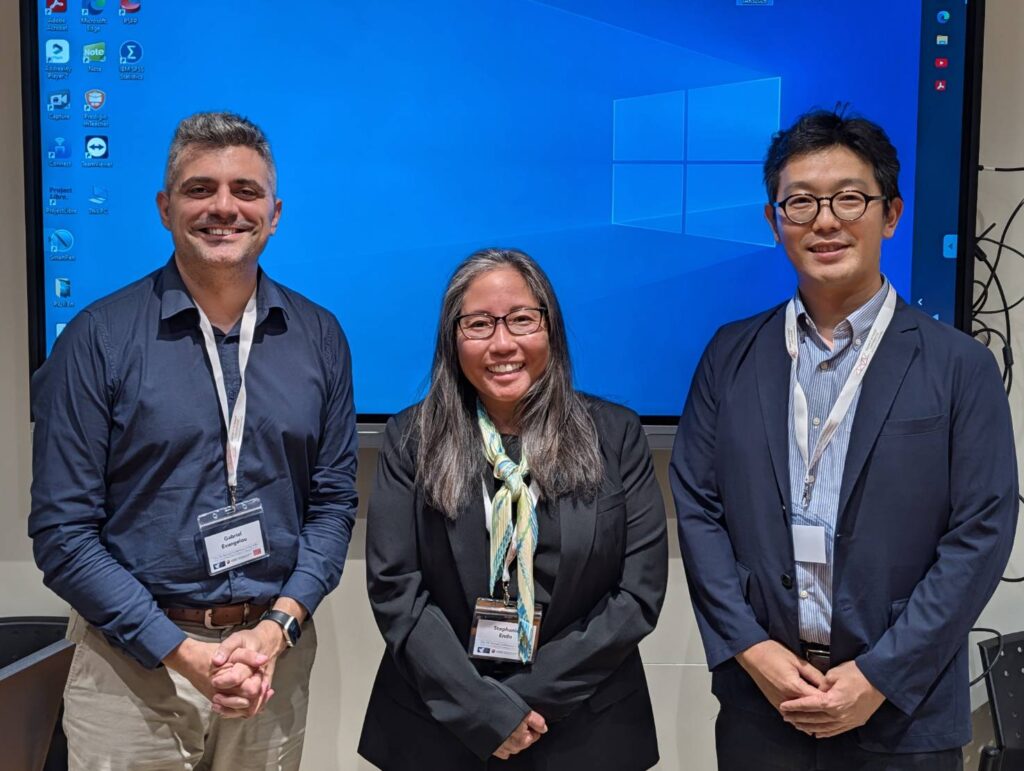
Image 1: Group Photograph from the session in which I participated
4. Lessons from Cyprus: What Do We “Share”?
Can people share something and act together while continuing to hold different memories and views of the past? The session that left the strongest impression on me at this year’s IARS conference was organized by the Technical Committee on Cultural Heritage, which was established through an agreement between the two sides of Cyprus.
The Committee brings together Greek Cypriot and Turkish Cypriot specialists across the divide to preserve and restore churches, mosques, cemeteries, and other forms of cultural heritage found across the island.
During the session, a question was raised about what happens when Turkish Cypriots restore a church that is important to Greek Cypriots. To whom should such a church be understood to belong? Would ethnic and religious differences not lead to conflict? The response from the Committee members was simple:
“It has been there for a long time, so it must be preserved.”
The Committee members regarded churches and mosques not as the exclusive property of a particular ethnic or religious group, but as part of the island’s “Shared Heritage.” What is important here is that Greek Cypriots and Turkish Cypriots do not necessarily share the same meanings or historical interpretations of these sites. Nevertheless, they can recognize them as part of the history of the same island and preserve them together. People can engage with the same past without understanding it in the same way.
It was also significant that the Technical Committee on Cultural Heritage did not seek agreement on historical interpretation itself. Rather than deciding which account of history was correct, the participants worked as specialists on the practical question of how to preserve the cultural heritage before them. They were building relationships not by agreeing on everything, but by beginning with what they could do together.
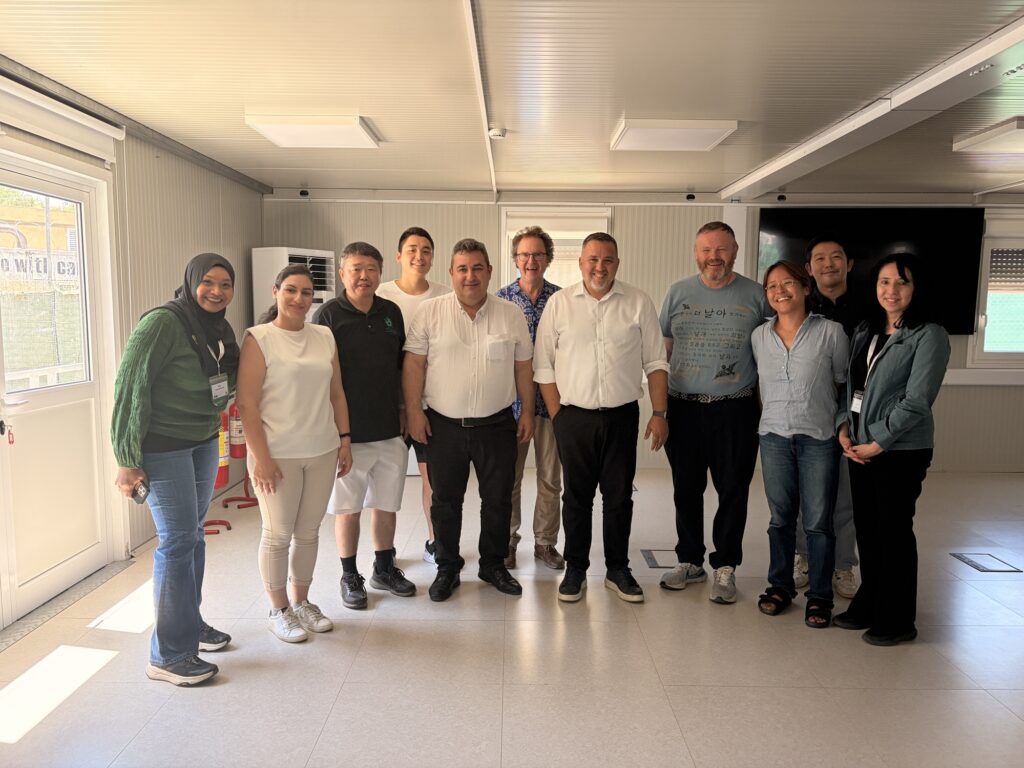
Image 2: Group photograph from the Technical Committee on Cultural Heritage session
5. What Connects People after Differences Remain?
Through my presentation on the Geochang Massacre and the activities of the Technical Committee on Cultural Heritage in Cyprus, I considered what connects people with different memories within the same society.
In the case of the Donghak Peasant War, the state, the descendants, local governments, and civil society organizations have continued to engage with the same past from different positions. Multiple memories that have not been integrated into a single interpretation appear to coexist within the same “vessel” of the Donghak Peasant War. Yet, as the Geochang Massacre shows, the existence of such a vessel does not eliminate conflict. On the contrary, politics emerges precisely because different memories are placed within the same vessel and their meanings and positions remain contested.
In this respect, the Technical Committee on Cultural Heritage in Cyprus suggested a different possibility. Greek Cypriots and Turkish Cypriots do not share the same historical understanding of churches and mosques. Nevertheless, they have accumulated practical experience by restoring and preserving these sites together. What was taking place was not the confirmation of an already existing common history, but the formation, through concrete practice, of a vessel of “Shared Heritage” in which different people could participate together.
Reconciliation, then, may not mean integrating different memories into a single account or eliminating conflict. It may instead mean creating a “vessel” that allows different memories and meanings to remain within the same society, enables politics over their positions to continue, and prevents relationships themselves from being severed.
Through this year’s IARS conference, my interest expanded from the question of why narratives and demands continue after state recognition to the question of how different memories and demands can coexist, or come into conflict, within particular “vessels” while still remaining connected to the same society. The forms taken by these vessels differ in the cases of the Donghak Peasant War, the Geochang Massacre, and Cyprus. What connects different memories within the same society, and what enables people to continue engaging with the past within it? I hope to further develop this research with the aim of contributing a paper to the Ripar Book Project, which is currently being planned by the Philosophy and Psychology Group.
Finally, I would like to express my sincere gratitude to Professor Toyomi Asano, who leads the Waseda University International Reconciliation Studies Project, for giving me the opportunity to participate in this conference. I would also like to thank Ms. Shima Asami and Ms. Hiroko Kawaguchi of Waseda University for their generous assistance with the necessary arrangements.