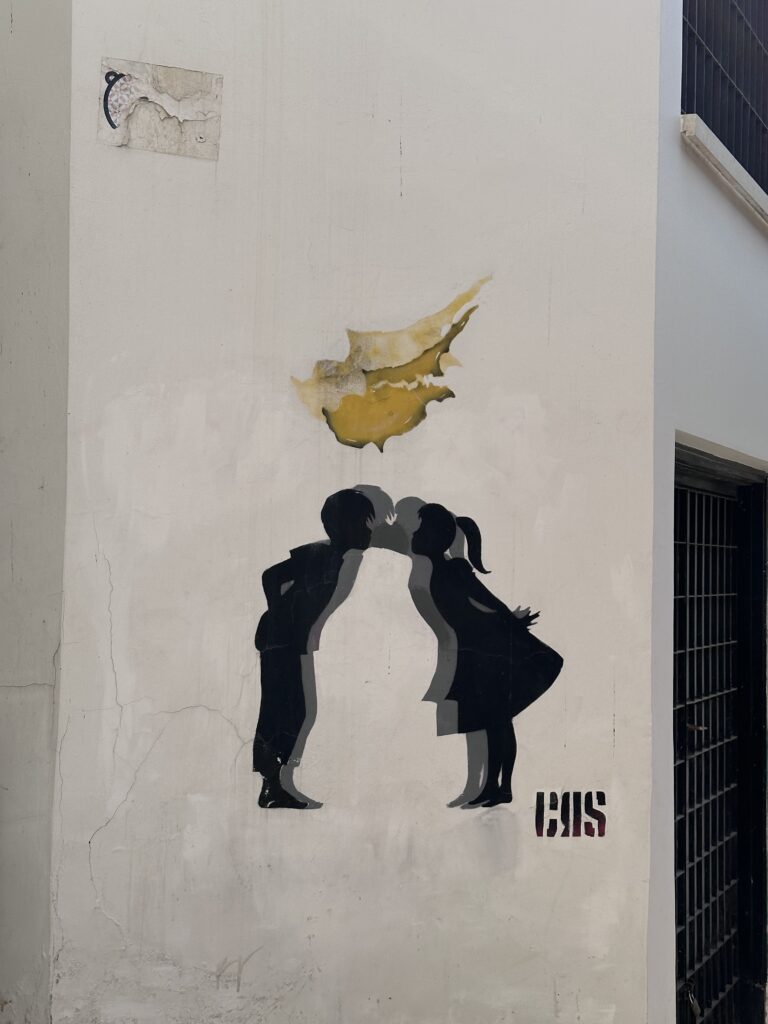
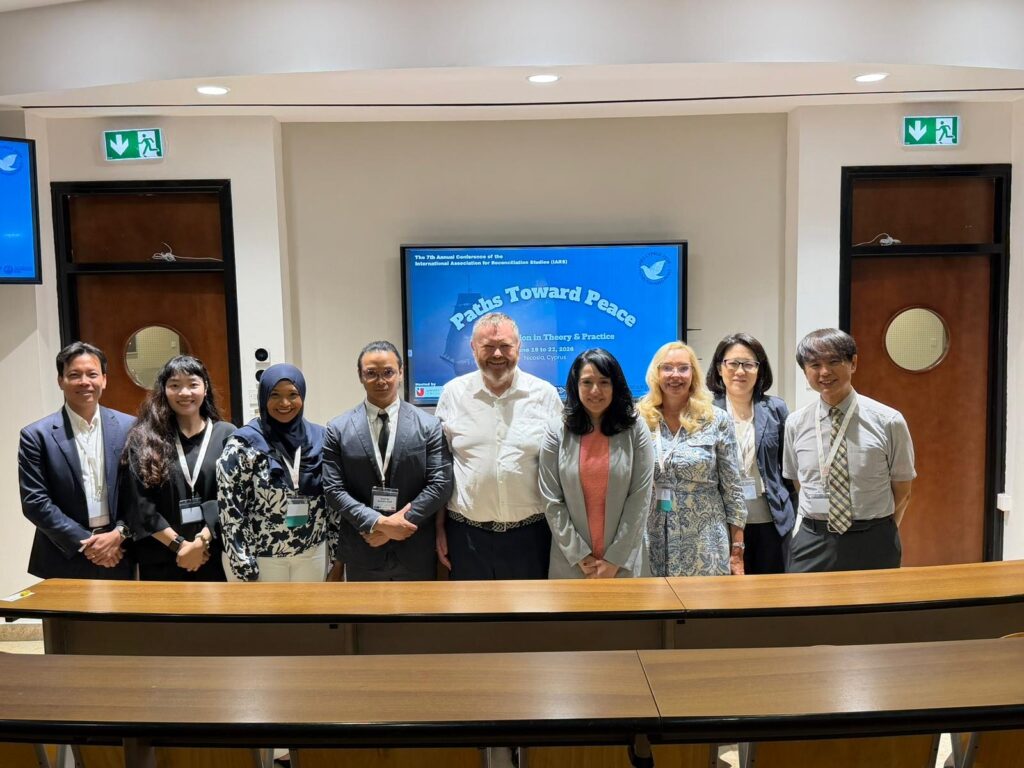
Religion, belief, and faith are often weaponized to start wars, separate societies by emphasizing differences, and broaden the gap between actors in conflict, yet they remain among the most powerful tools for ending them. I presented my research at the 7th Annual Conference of the IARS, Paths Toward Peace: Reconciliation in Theory and Practice. The research examined Indonesia’s efforts, in cooperation with religious institutions, to maintain national harmony despite its diversity.
Various national and international surveys have documented trends in religious intolerance, illustrating that religious intolerance is not merely a fringe phenomenon but is becoming increasingly mainstream in public discourse and institutional settings in Indonesia. This phenomenon raises questions about Indonesia’s efforts to promote tolerance in the education sector. To address these issues, Indonesia launched the Religious Moderation Program (Moderasi Beragama) to tackle radicalism and intolerance in educational institutions and foster mutual understanding among people of different religions, races, languages, and cultural backgrounds, ultimately promoting social harmony and peaceful coexistence.
The findings show that a school’s level of diversity and teachers’ beliefs play significant roles in the implementation of religious moderation. Even though teachers share a similar understanding of the values of religious moderation, this does not ensure that their teaching practices can fully convey these values to students. Limited opportunities for meaningful interaction due to the lack of diversity in the school environment, insufficient institutional support, and teachers’ judgments about what students need most at each grade level are common challenges.
Moreover, the Q&A session deepened the discussion by exploring the concept of “religious moderation” from the perspective of reconciliation. Since the research primarily highlights the practical implementation of religious moderation from teachers’ perspectives, it lacks discussion of how religious moderation might contribute to the reconciliation process and nurture social harmony. Therefore, most of the comments and questions focused on the less-explored dimensions of religious moderation and its potential contribution to reconciliation discourse.
Nevertheless, I participated in many sessions and received valuable insights into reconciliation discourse from both academics and practitioners. Reconciliation is often seen merely as a strategy and process for resolving disputes and reconciling parties in conflict. While this understanding is not entirely incorrect, it oversimplifies the broader discourse.
For example, religion is one dimension of reconciliation discourse involving multiple actors, not only those directly engaged in conflict. Conceptually, religion offers tools that help individuals reconcile with others and, perhaps more importantly, with themselves. Religion provides a framework for forgiveness, both forgiving others and seeking forgiveness, which are essential for initiating reconciliation and sustaining it over the long term. Practically, religious leaders can become vital mediators in peacebuilding efforts. In many cases, they are closer to grassroots communities than local governments. They are often perceived as neutral actors who can bridge conflicting parties. In a nutshell, rather than emphasizing the fundamental differences among religions and beliefs, religion should be viewed as a valuable resource for enriching reconciliation discourse.
“Nothing is agreed until everything is agreed.” This quote came from the keynote speakers, former negotiators from Cyprus representing both the Greek Cypriot and Turkish Cypriot communities. Both speakers presented a similar vision of reconciliation in Cyprus based on their field experience. Generally speaking, citizens on both sides appear ready to reconcile, but political elites have moved in the opposite direction, which has become the main reason why the latest reconciliation efforts have failed.
To better understand these claims, I walked around the old town and spoke with local residents from both the Greek Cypriot and Turkish Cypriot communities. I understand that these observations cannot fully capture the reality, especially from the perspective of political elites, but they helped me understand two important points. First, the current generation does not experience the same level of conflict-related tension as the one or two generations before them, who directly witnessed the fear and violence of the conflict. As a result, younger generations are generally more open to forgiving and seeking forgiveness. The absence of deep-rooted resentment and a desire for revenge has encouraged them to adopt a future-oriented perspective, recognizing that peace benefits both communities. Second, despite the immigration procedures that both communities must complete, crossing between the two territories was surprisingly easier than I had expected. In my observation, this ease of movement reduces tensions at the grassroots level, encourages healing from generational trauma, and prevents younger generations from reliving the intensity of historical conflict.
In conclusion, the 7th Annual Conference of the IARS, held in Cyprus, provided valuable experiences both academically and practically. As a young academic, I am aware of the risk of falling into the ivory tower dilemma. Listening to and interacting with scholars, experts, and practitioners, while also observing the local context firsthand, broadened my understanding of reconciliation as both a theoretical concept and a practical process.